 Atanaria
Philippe Lacheau has a rare talent: his films are never quite what they first appear to be. You think you see the joke coming, the tone, the mechanics… and he keeps catching you off guard. Those who judged him too quickly had to swallow their words after his brilliant Nicky Larson, arguably one of the most successful manga adaptations ever made in France. With The Marsupilami, the fear was that he might drift into the slippery territory of overly “family-friendly” comedy and dilute his irreverence. What happens on screen is exactly the opposite.
A fake sequel to Alain Chabat’s cult film – it only brings back the character played by Jamel Debbouze – Lacheau’s feature first opts for restraint. Like its predecessor, it smartly chooses not to overexpose the creature in the opening minutes. For a good third of the film, the Marsupilami remains largely off-screen, leaving plenty of room for Lacheau and his gang to do what they do best: unleash comic ideas at a breakneck pace.
Visual gags pile up, “adulescent” punchlines keep flying, and pop culture is tapped into with infectious glee. Tarek Boudali, irresistible as a washed-up former singer, finds here one of his best playgrounds to date. Not every single joke hits with the same intensity, but the film’s generosity commands respect: there are so many jokes, callbacks and comic detours that it’s virtually impossible not to find something to laugh at. Lacheau even dares to push things further than you’d expect in a mainstream film – notably in a sequence involving a little blue pill – and proves he hasn’t lost his taste for audacity.
Where “Fifi” truly shines is in his distinctly French, and today surprisingly rare, way of breathing life into a real “ensemble comedy”. We all know a Lacheau film will bring along Julien Arruti, Élodie Fontan and Tarek Boudali: it’s almost a moral contract with the audience, who come back each time as much for the troupe as for the story. But instead of closing in on itself, this group keeps expanding from one film to the next.

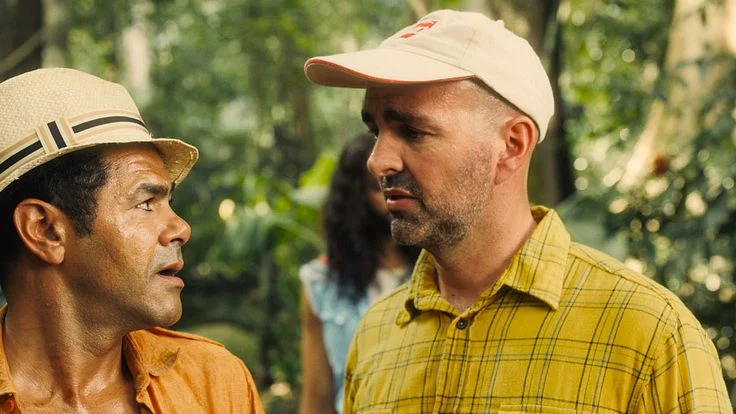
Reem Kherici, Gérard Jugnot as a ship captain, Alban Ivanov, Jamel Debbouze and other faces we’ll let you discover: everyone seems to be genuinely delighted to drop by, sometimes for a single scene. The result is a film radiating warmth and a sense of conviviality that’s almost contagious. You really get the feeling that with each new project, the shoot is as much a party as it is a job, and that The Marsupilami also serves as a delightful excuse to reunite this big film family. At times, that troupe energy even brings to mind the glory days of the Splendid.
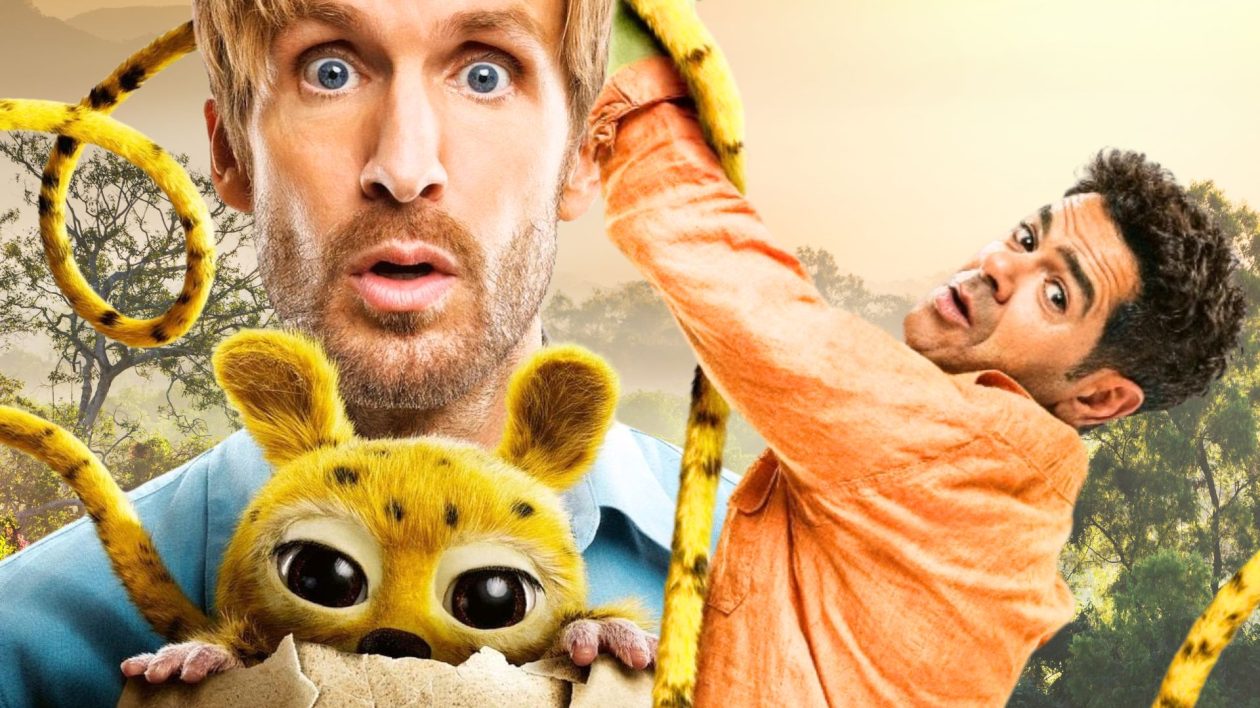
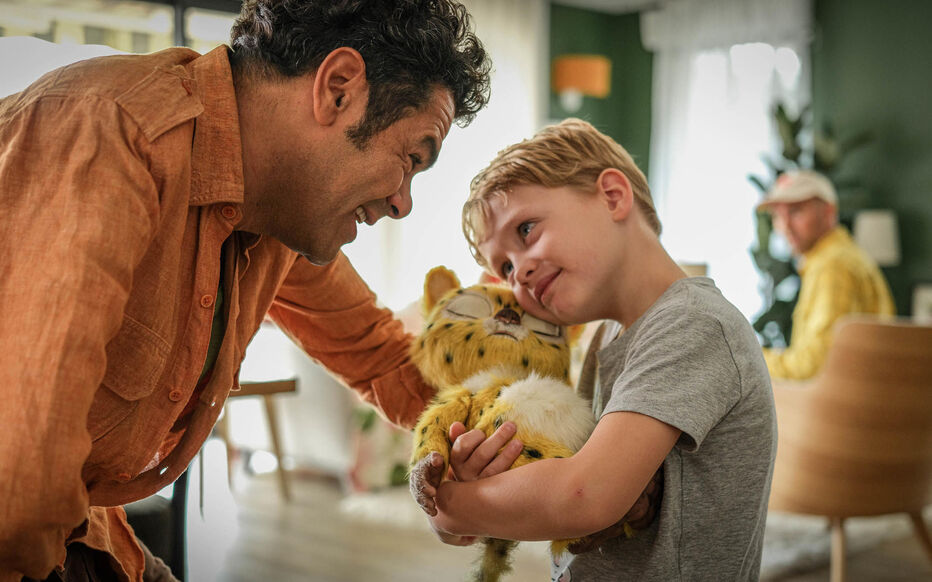
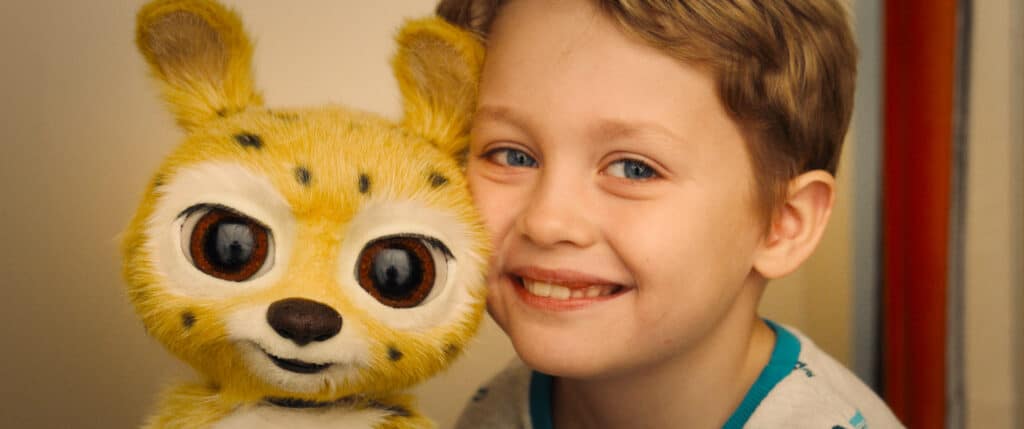
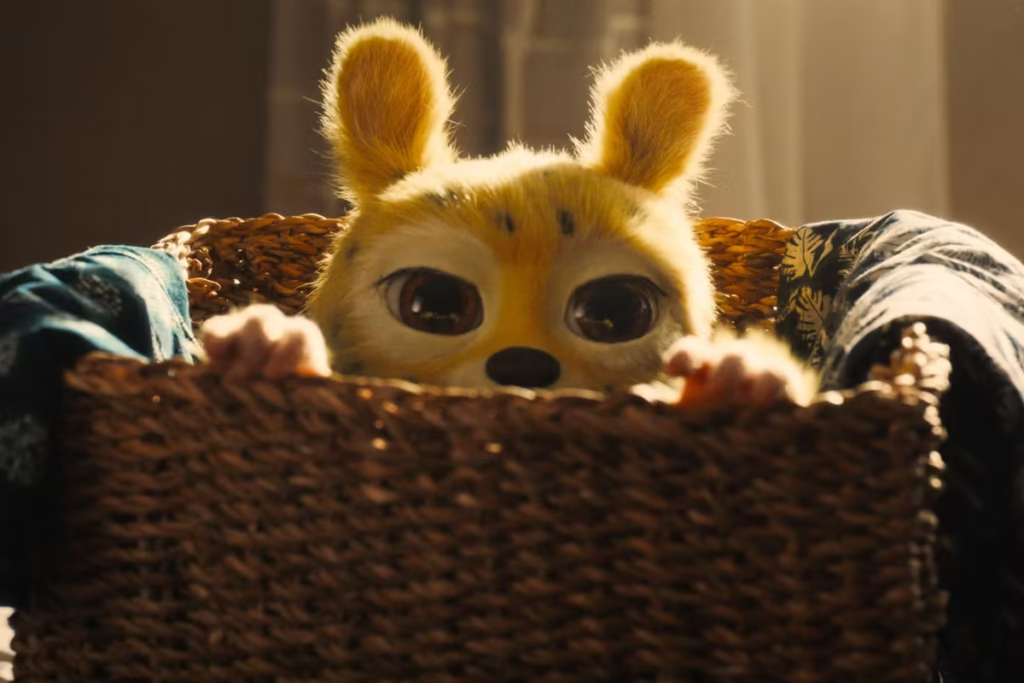
And what about the Marsupilami itself? Rest assured: the beloved creature lives up to all expectations as a mischievous and irresistible mascot. Visually, the baby Marsu is a triumph – expressive, tender and as bouncy as fans could hope. Lacheau has a ball with all the animal’s skills, from its endless tail to its childlike mischief, and the on-screen chemistry with young Léo is one of the film’s nicest surprises. In the theater, kids burst out laughing every time the baby Marsu bounces into frame, clear proof that the gamble of truly family-oriented entertainment has paid off.
The filmmaker walks a very fine line: he has to balance his sometimes very in-your-face humor – toilet jokes, absurdity, fully unleashed – with the need not to lose the youngest viewers. Instead of reining in his madness, Lacheau chooses to play on multiple levels. The little ones revel in the Marsu’s antics and physical gags, while adults savor the innuendo, the more risqué detours and the sharper references. This delicate balance gives the film a singular texture: you often laugh for different reasons depending on your age, but you still laugh together.

The references, in fact, are one of this Marsupilami’s great strengths. Dragon Ball, The Goonies, The Transporter, Top Gun, Titanic… an entire shared pop-culture universe is summoned, owned and celebrated. Far from lazy winks, Lacheau builds real cinematic moments out of these tributes, constantly playing on the boundary between parody and love letter. At times, the film joyfully flirts with the limit, but always with enough wit, distance and affection to win you over. You can feel he’s talking directly to a specific generation of viewers, while still remaining readable for everyone else.
When all is said and done, this Marsupilami by Lacheau mostly leaves you with a vivid sense of sheer enjoyment. Enjoyment of comedy, of a tight-knit troupe, of being a spectator. You walk out with the feeling you’ve just watched a piece of mainstream entertainment in the very best sense of the phrase: generous, inventive, accessible without being formulaic, powered by a crew that clearly hasn’t run out of ways to reinvent itself while pulling off some of the most delightful “nonsense” in contemporary French comedy. If the Marsupilami was looking for a solid excuse to leap back onto the big screen, Philippe Lacheau has just given it the happiest of comebacks.