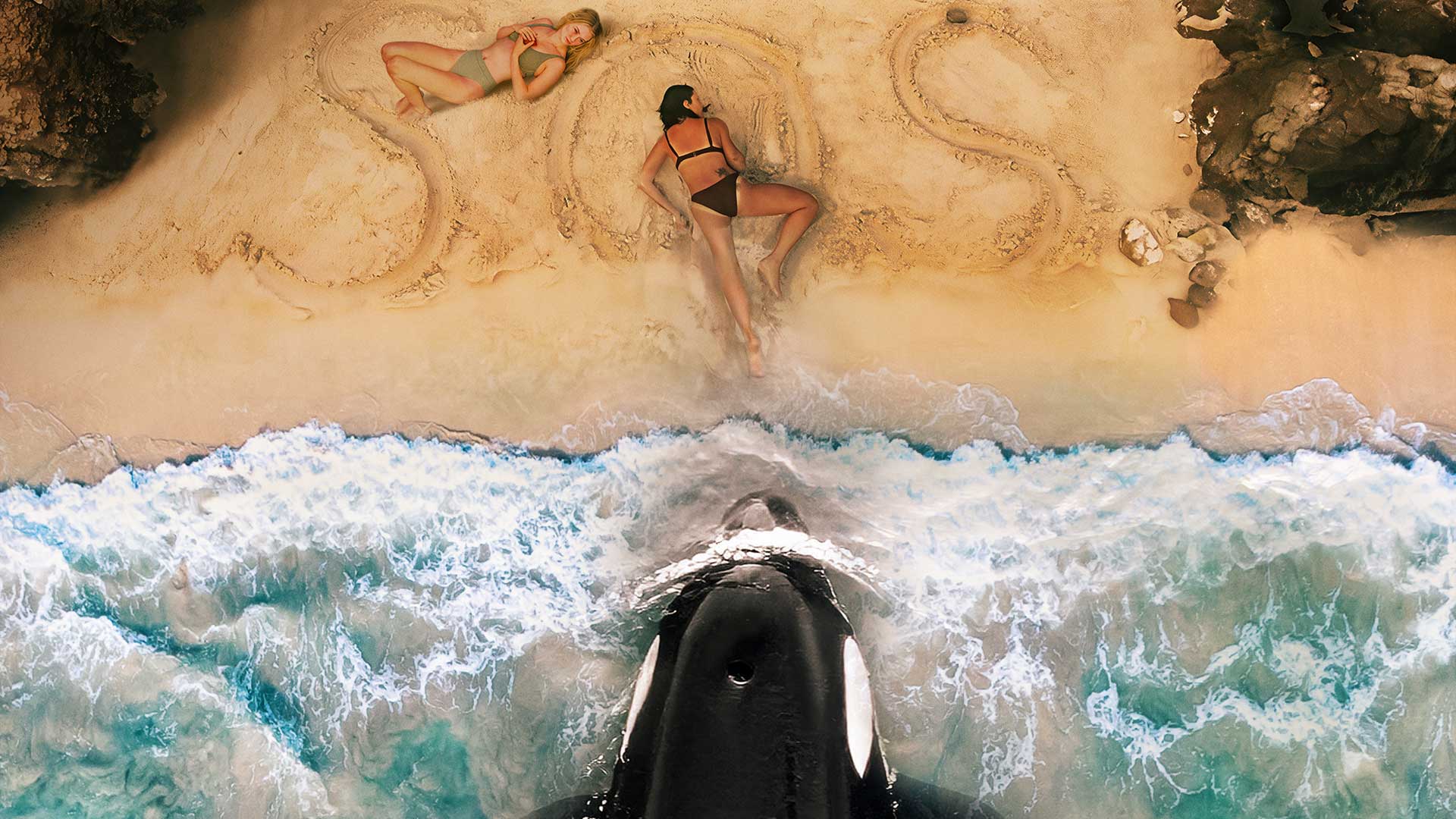
 Atanaria
It is a truth universally acknowledged that any aquatic horror film must be measured against the Great White benchmark. Spielberg’s Jaws (1975) did not merely raise the bar for creature features; it encased the entire subgenre in a cage of narrative perfection from which few filmmakers have successfully escaped. When modern entries like last year’s Dangerous Animals succeed, they do so by either finding fresh currents within the formula or by embracing the elastic absurdity of the premise with camp fervour (see: Piranha 3D’s giddy bloodbath). Jo-Anne Brechin’s Killer Whale, unfortunately, attempts to chart a middle course between prestige trauma drama and exploitation thrills, only to discover that in the realm of the killer orca, there is no safe middle ground—only the deep end or the kiddie pool. The result is a curiously toothless affair, a film that wears the skin of The Shallows but lacks that film’s lean, muscular tension.
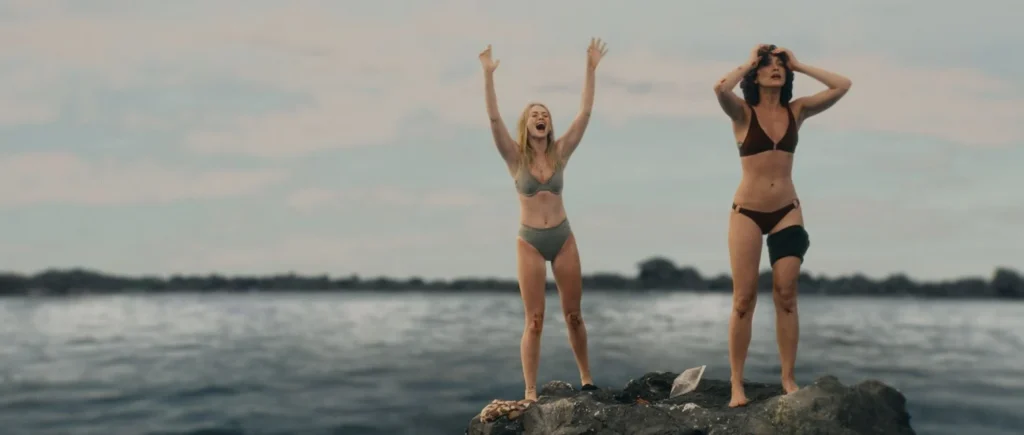
The narrative architecture initially promises something more ambitious than the average shark-and-awe spectacle. Virginia Gardner—no stranger to vertical peril after 2022’s Fall—plays Maddie, a cello prodigy whose artistic future is derailed by a traumatic diner robbery that leaves her hearing damaged and her boyfriend murdered. This prologue is grimly effective, grounding Maddie in a palpable grief that transforms her into a contemporary “Final Girl” before the creature even enters the frame. When, one year later, she journeys to Thailand’s Akan Sea Islands with her reckless friend Trish (Katharine McPhee’s screenplay providing the scaffolding), the film appears poised to explore the intersection of sensory trauma and survival horror. A damaged protagonist confronting a leviathan in a soundscape of muffled terror? The conceptual potential is undeniable.
Yet Brechin’s film seems curiously embarrassed by its own pulp DNA. Rather than exploiting the thriller possibilities of Maddie’s auditory impairment—imagine the horror of a predator you can feel through vibration but cannot fully hear—the script uses her deafness merely as symbolic wallpaper, a metaphorical burden rather than a cinematic tool. The cello, too, is abandoned as a motif; one expects a reckoning between Maddie’s silenced music and the whale’s song, a harmonic confrontation between artist and beast. Instead, we get a clumsy eco-thriller setup involving the orca Ceto, a captive whale transferred to the dubiously named “World of Orca” marine park after killing her handler in a prologue that features effects so provisional they nearly derail the film before it has begun.
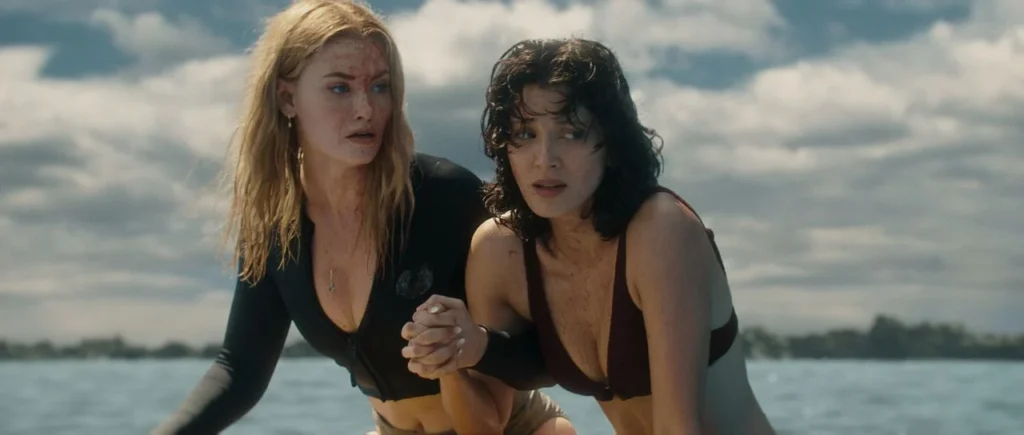
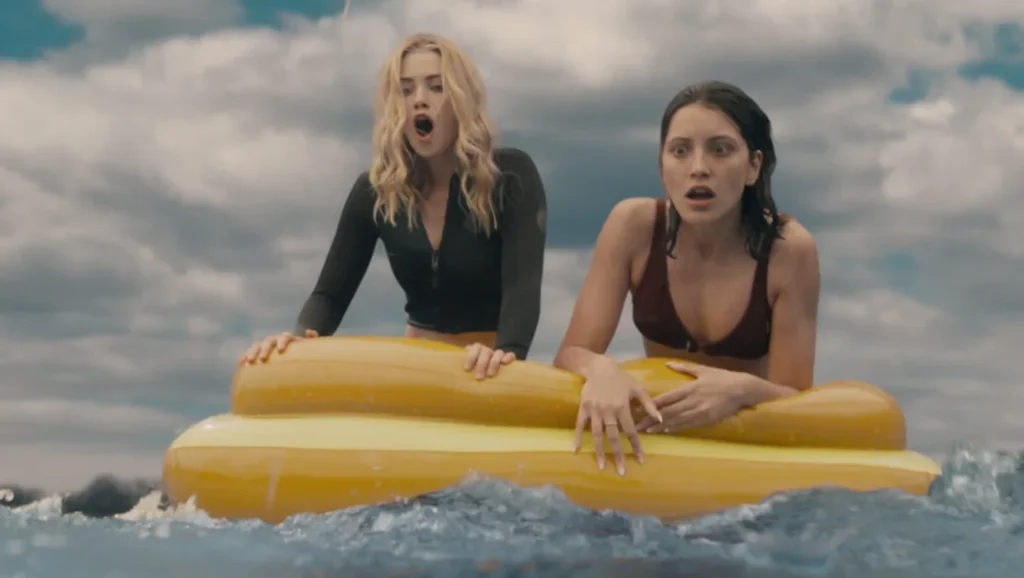
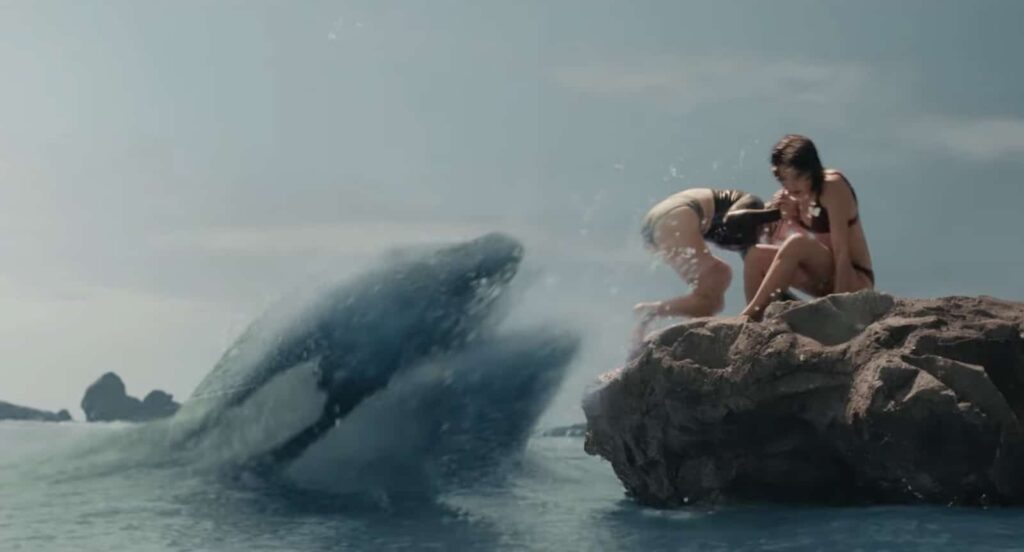
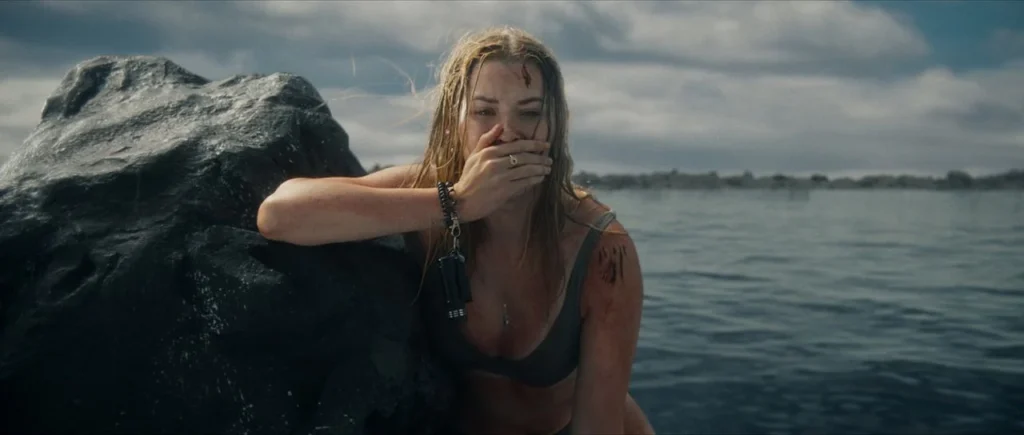
The tonal incoherence becomes fatal once the genre mechanics kick in. Invited by a chiseled local (Mitchell Hope) to infiltrate the marine park and exact some vague eco-vandalism, Maddie and Trish find themselves stranded on a jet ski amid a haunted reef when Ceto—now improbably loose and apparently suffering from Stockholm syndrome—begins her rampage. Here, the film’s central paradox becomes unavoidable: Ceto is simultaneously presented as a traumatized victim of captivity (retaining rage against her jailers) and as an inexplicable force of nature, yet the screenplay cannot be bothered to explain how she navigated from her tank to an open reef, nor why she has developed a taste for vengeance against random tourists rather than the specific humans who caged her. Logic is rarely the strong suit of the creature feature, but Killer Whale demands we take its environmental commentary seriously while asking us to ignore fundamental questions of biology and geography.
The visual effects only compound the disappointment. Depicting an orca in motion is technically challenging—their locomotion lacks the jerky, mechanical simplicity of a shark’s lateral thrust, requiring fluid, mammalian grace that CGI often struggles to capture at this budgetary tier. Ceto moves with the weightless, frictionless glide of a video-game asset, undercutting every suspense sequence. Where The Shallows used its digital shark sparingly, hiding flaws in the glare of sun on water, Killer Whale insists on prolonged, well-lit reveals that expose the artifice. The creature never registers as a physical threat, only as a pixelated phantom haunting a green screen.
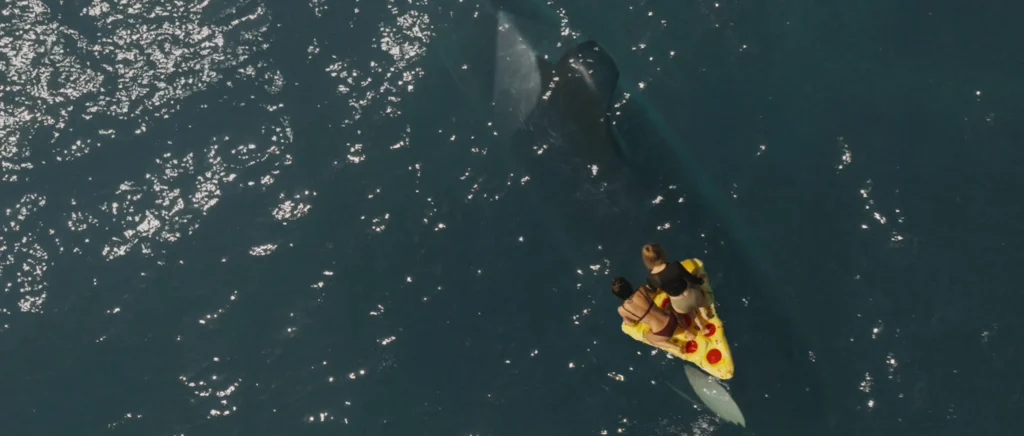
What remains is a character study struggling to breathe inside a B-movie body. Gardner commits admirably to Maddie’s grief, and the film lingers with genuine sensitivity on her survivor’s guilt. But audiences do not purchase tickets for Killer Whale expecting a chamber drama about artistic paralysis. Thevery title promises exploitation, yet Brechin’s direction is too polite, too tentative, to deliver the lurid highs of the genre. It refuses to be scary enough to satisfy the horror contingent, nor ridiculous enough to satisfy the midnight-movie crowd. In trying to honour both the trauma narrative and the creature feature, it betrays both, leaving us with a film that is neither emotionally resonant nor viscerally thrilling.
When the credits roll, one is left with the peculiar sensation of having watched a film’s potential drown in real time. Like its protagonist’s abandoned instrument, Killer Whale is broken, silent, and ultimately forgettable.