 Atanaria
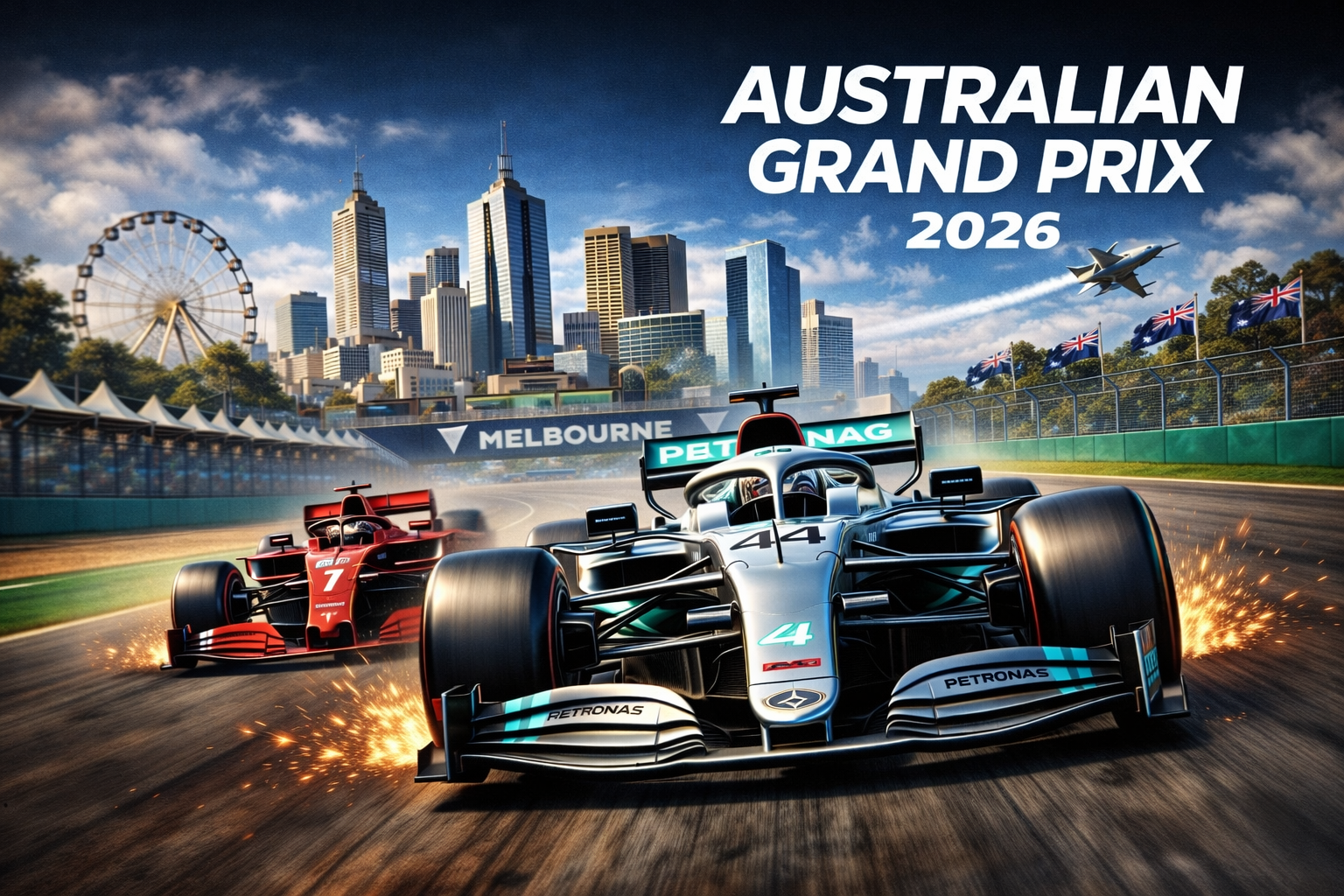
Mercedes opened Formula 1’s new era in emphatic style in Melbourne, with George Russell leading home team‑mate Kimi Antonelli in a controlled one‑two as chaos, crashes and comebacks lit up the 2026 Australian Grand Prix.
Mercedes set the benchmark
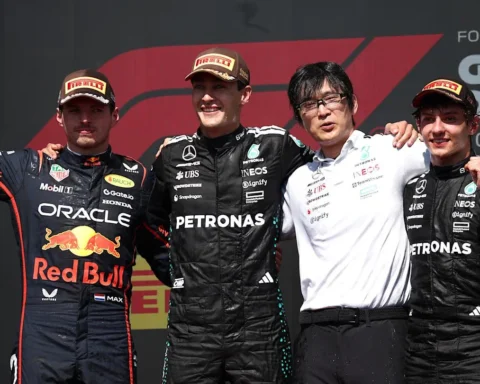
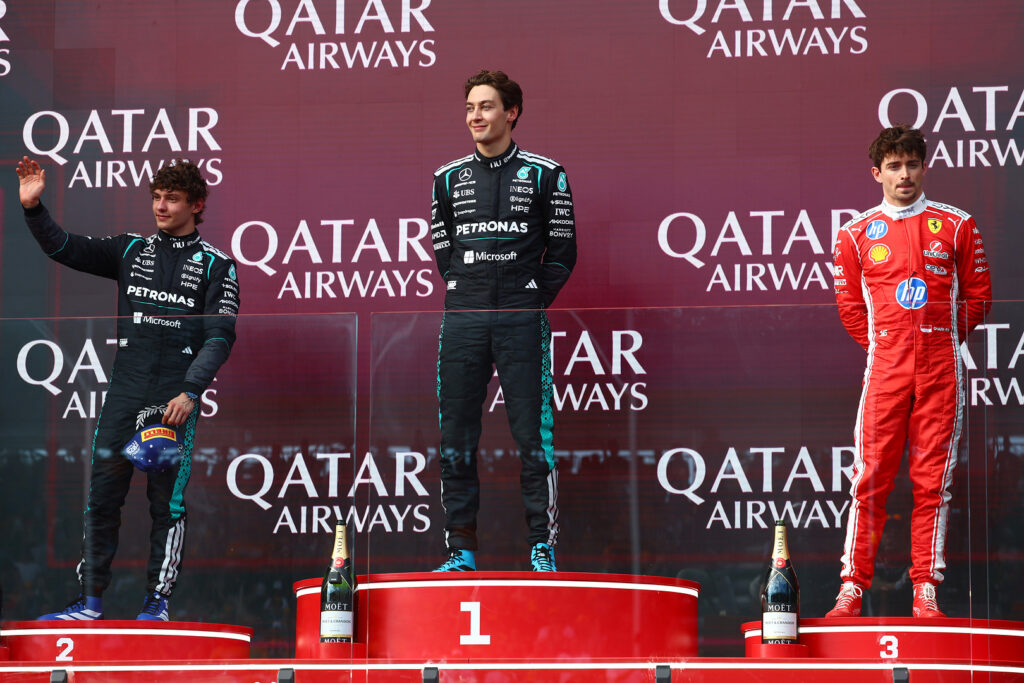
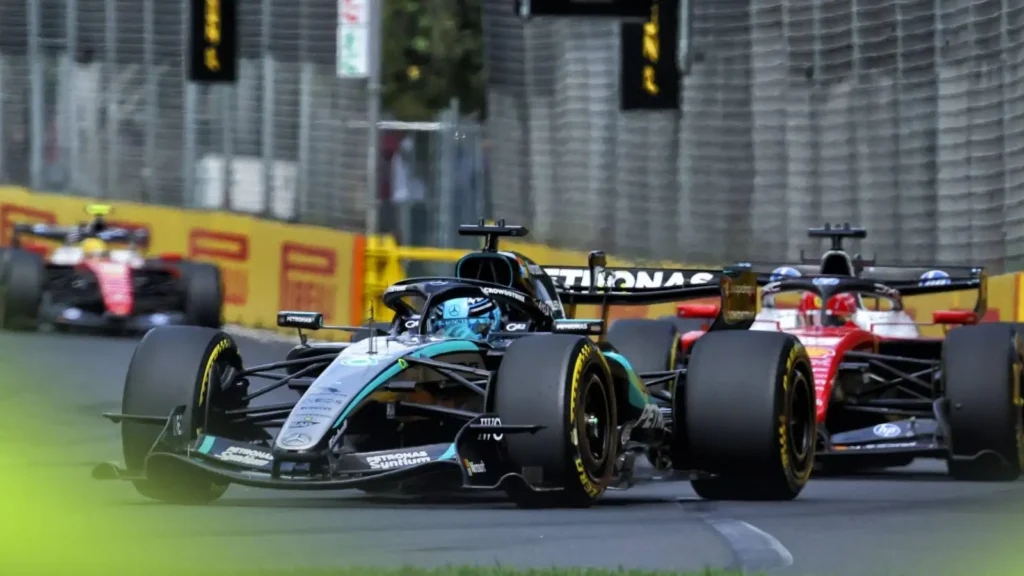
From pole position, Russell survived a bruising early fight with Ferrari and the new 2026 energy rules to claim his sixth career win and Mercedes’ first double since Las Vegas 2024. After losing out off the line, he admitted: “I took a bad start, I had nothing left in the battery, I saw Charles coming and I was just happy to get through it.” Once the race settled after the early Virtual Safety Car triggered by Isack Hadjar’s retirement, Mercedes committed to a bold one‑stop strategy that allowed Russell to reassert control at the front. He crossed the line 2.9 seconds ahead of Antonelli, who completed the Silver Arrows’ statement of intent for F1’s new technical era.
Behind Russell, Antonelli delivered the most complete drive of his young F1 career, turning a poor launch into a mature recovery. “My start was really bad, I lost a lot of positions,” he conceded, “but overall it was a good race: the pace was really strong, especially at the end.” His late‑race speed allowed him to close the gap to Russell and underline just how comfortable Mercedes was relative to the rest of the field. Team boss Frédéric Vasseur summed up the balance of power bluntly from the Ferrari pit wall: “Mercedes are faster than us in all conditions: in qualifying and in the race. That much is clear.”

Ferrari’s flying start, fading threat
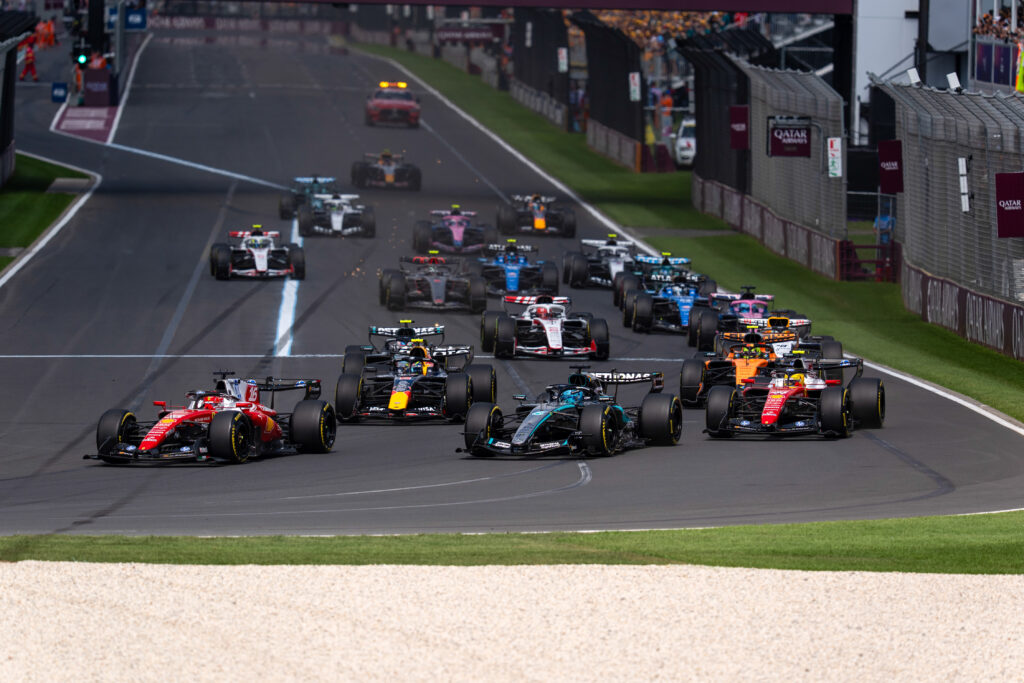
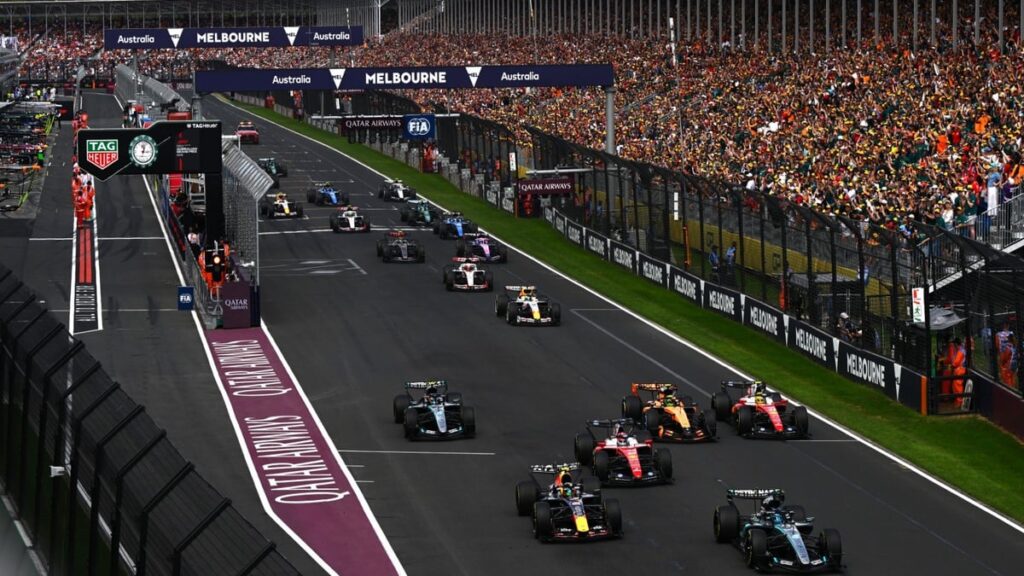
Ferrari briefly stole the show at lights out, with Charles Leclerc launching from fourth on the grid to snatch the lead into Turn 1, sweeping past Hadjar, Antonelli and Russell in a single decisive move. Lewis Hamilton, starting seventh, produced an equally impressive getaway to slot into third, giving the Scuderia early track position over both Mercedes. For several laps, the red cars and Russell traded the lead in a frenetic, battery‑limited opening phase that showcased the new overtake mode and the brutal energy management challenges of 2026.
The turning point came under the Virtual Safety Car for Hadjar’s engine failure. Mercedes double‑stacked Russell and Antonelli, while Ferrari elected to stay out, a choice Hamilton openly questioned: “My tyres are still okay – do not box me at the same.” Once the race went green, the older Ferrari tyres began to surrender; Leclerc and Hamilton were forced onto the back foot as Mercedes executed their one‑stop plan to perfection. Leclerc nevertheless salvaged a hard‑fought third place and opened his season with a podium, later reflecting: “There were huge speed differences between everyone, it was complex to manage, but I’m happy to have come out of that first battle in front… Third was the best we could hope for. I don’t think we could have beaten Mercedes.”
Hamilton again finished just shy of the rostrum in fourth, his podium wait with Ferrari stretching on despite the promise of his race craft. “It was an amazing weekend,” he insisted. “There are a lot of positives to take. It was an incredible effort from the team and the factory… a really exciting race, so I’m looking forward to what’s coming next.” Vasseur, for his part, chose cautious optimism: Ferrari leave Melbourne with 27 points and a clear view of the “huge list of things to improve… on the car, in the team and even on some aspects of the regulations.”
Full race classification – Australian GP 2026
| Pos | Driver | Team | Status / Gap |
|---|---|---|---|
| 1 | George Russell | Mercedes | Winner |
| 2 | Kimi Antonelli | Mercedes | +2.974 s |
| 3 | Charles Leclerc | Ferrari | +15.519 s |
| 4 | Lewis Hamilton | Ferrari | +16.144 s |
| 5 | Lando Norris | McLaren | +51.741 s |
| 6 | Max Verstappen | Red Bull | +54.617 s |
| 7 | Oliver Bearman | Haas | +1 lap |
| 8 | Arvid Lindblad | Racing Bulls | +1 lap |
| 9 | Gabriel Bortoleto | Audi | +1 lap |
| 10 | Pierre Gasly | Alpine | +1 lap |
| 11 | Esteban Ocon | Haas | +1 lap |
| 12 | Alex Albon | Williams | +1 lap |
| 13 | Liam Lawson | Racing Bulls | +1 lap |
| 14 | Franco Colapinto | Alpine | +2 laps |
| 15 | Carlos Sainz | Williams | +2 laps |
| 16 | Sergio Pérez | Cadillac | +2 laps |
| 17 | Lance Stroll | Aston Martin | +15 laps |
| 18 | Fernando Alonso | Aston Martin | DNF |
| 19 | Valtteri Bottas | Cadillac | DNF |
| 20 | Isack Hadjar | Red Bull | DNF |
| 21 | Oscar Piastri | McLaren | DNS (no start) |
| 22 | Nico Hülkenberg | Audi | DNS (no start) |
Drivers’ championship after Australia
After round 1, the drivers’ standings mirror the Melbourne points haul.
| Rank | Driver | Team | Points |
|---|---|---|---|
| 1 | George Russell | Mercedes | 25 |
| 2 | Kimi Antonelli | Mercedes | 18 |
| 3 | Charles Leclerc | Ferrari | 15 |
| 4 | Lewis Hamilton | Ferrari | 12 |
| 5 | Lando Norris | McLaren | 10 |
| 6 | Max Verstappen | Red Bull | 8 |
| 7 | Oliver Bearman | Haas | 6 |
| 8 | Arvid Lindblad | Racing Bulls | 4 |
| 9 | Gabriel Bortoleto | Audi | 2 |
| 10 | Pierre Gasly | Alpine | 1 |
| 11 | Esteban Ocon | Haas | 0 |
| 12 | Alex Albon | Williams | 0 |
| 13 | Liam Lawson | Racing Bulls | 0 |
| 14 | Franco Colapinto | Alpine | 0 |
| 15 | Carlos Sainz | Williams | 0 |
| 16 | Sergio Pérez | Cadillac | 0 |
| 17 | Lance Stroll | Aston Martin | 0 |
| 18 | Fernando Alonso | Aston Martin | 0 |
| 19 | Valtteri Bottas | Cadillac | 0 |
| 20 | Isack Hadjar | Red Bull | 0 |
| 21 | Oscar Piastri | McLaren | 0 |
| 22 | Nico Hülkenberg | Audi | 0 |
Constructors’ championship after Australia
Mercedes leave Melbourne with a maximum 43 points and an early lead over Ferrari.
| Rank | Team | Points |
|---|---|---|
| 1 | Mercedes | 43 |
| 2 | Ferrari | 27 |
| 3 | McLaren | 10 |
| 4 | Red Bull | 8 |
| 5 | Haas | 6 |
| 6 | Racing Bulls | 4 |
| 7 | Audi | 2 |
| 8 | Alpine | 1 |
| 9 | Williams | 0 |
| 10 | Cadillac | 0 |
| 11 | Aston Martin | 0 |
Verstappen’s charge and Hadjar’s heartbreak
If Mercedes owned the front, Max Verstappen owned the spotlight in the midfield. After crashing in qualifying and starting a lowly 20th, the four‑time champion carved through the pack to finish sixth, gaining 14 places in a relentless recovery drive. “We maybe could have finished fifth,” he judged. “I had too much graining on the tyres during the race, that’s why we had to go for two stops. Once I cleared the midfield I was in my own race, with graining all the time, and it didn’t help that we had two hard tyres while our rivals had two mediums.” Despite the frustration, his pace – and the fact he finished just behind reigning champion Lando Norris – gave Red Bull encouragement that the RB‑Ford package has solid foundations.
Team‑mate Isack Hadjar suffered the cruel opposite. After a superb launch that briefly put him in the fight at the front, his race ended on lap 12 with a terminal engine failure, a brutal echo of his 2025 Melbourne disappointment. His description of the problem was vivid: “I knew the engine was going to explode after the first corner. The noise totally changed after the start… I felt like I was driving a V8 Supercar: the noise was crazy and I knew it was going to blow at some point.” Red Bull team principal Laurent Mekies acknowledged the pain but focused on the broader picture: “It was a big headache for everyone… It’s a shame we lost Isack’s engine today because he had a great weekend, but that’s part of the game. It was the first race for our Red Bull‑Ford engine. We know there’s a lot of work to do… I’m not talking about Mercedes, they’re way ahead, but I hope we can soon fight with Ferrari and McLaren like we did today.”
At McLaren, Norris quietly banked fifth place but sounded anything but satisfied. Already dealing with the loss of home favourite Oscar Piastri – who crashed into the wall on his way to the grid and was unable to start – Norris spent much of the afternoon defending against Verstappen rather than attacking the leaders. “What can I say? ‘Ah, it was great, a lot of fun, and I’m looking forward to the next one!’” he said with biting irony, before conceding he had at least enjoyed the duel for fifth: “He had a lot more pace than us and I had to manage everything to keep him behind… I was happy because he got behind me very quickly in the race and I didn’t expect that. I’m still happy to have finished ahead of him.”
Rookies, new projects and the midfield story
Melbourne also showcased the new faces and new projects reshaping the grid. At Haas, Oliver Bearman delivered exactly what the team had hoped for, converting solid pace into a classy seventh place and six valuable points. Esteban Ocon, by contrast, could only manage 11th and made no effort to hide his frustration: “We lost a lot of time fighting all race. We clearly lacked performance from the start, it was exactly the same as last year, and that’s what’s very frustrating… The good thing is that we’re close to the points. The car can perform better than what we’re doing. We need to fix these problems and have two identical cars. That’s the goal for the next race.”
Further up, 17‑year‑old rookie Arvid Lindblad produced one of the weekend’s feel‑good stories, finishing eighth on debut for Racing Bulls. “I’m lost for words,” he admitted. “Living my first F1 weekend was very exciting, I’ve waited for this all my life. The race was crazy! At one point I think I was third – it was completely mad when you think about it. I really got everything out of the car in every session and didn’t make any mistakes.” That maturity, combined with his wheel‑to‑wheel duels with seasoned names like Verstappen, marked him as a standout rookie in an already crowded field of young talent.
Audi’s first appearance as a works team ended on a high note thanks to Gabriel Bortoleto, who guided the new car to ninth place and two historic points. “Scoring points in our first race as Audi and writing a page of motorsport history is something the whole team can be extremely proud of,” he said. “The car and power unit ran reliably all day, which rewards the huge effort over the winter… This result gives us a good base to build on, but we know there are still many areas to improve.” His team‑mate Nico Hülkenberg never made it that far; a technical issue on the way to the grid sidelined him before the start. “We didn’t get the chance to race today,” he lamented. “It’s obviously frustrating to miss the race and the opportunity to learn more. That said, it’s positive to see the team score points with Gabi – a great way to start Audi’s F1 era.”
Alpine, meanwhile, endured another bruising weekend, far from the expectations once attached to the French manufacturer. Pierre Gasly once again played fire‑fighter, dragging the A526 to 10th place and a solitary point. “It was a really tough weekend,” he admitted. “We had to fight a lot today. We learned a lot. It changes a lot compared to what we knew. There are many small things to improve, but that’s part of the work at the start of the season… I’d clearly like to fight further up. I think there’s a bit more potential than what we showed today. We take the positives and we’ll work for next week.” Team‑mate Franco Colapinto came home 14th, underlining how much work still lies ahead.
Williams and Cadillac: hard miles, harsh lessons
In the lower midfield, Williams and Cadillac left Australia with very different kinds of encouragement. For Williams, Alex Albon’s 12th and Carlos Sainz’s 15th places told the story of a car struggling for pace and grip. “It was a long race for us today,” Albon explained. “Right now we’re in a bit of ‘no man’s land’, not really fighting with the midfield. Our strategy was good but we clearly lack pace… The lap times show the car is too heavy and doesn’t generate enough downforce.” Sainz echoed that assessment after a promising start unravelled with a recurring front‑wing issue: “We had too many problems in every session… We had a problem with the front wing which cost us all the aero balance and caused big tyre degradation. From there, the race turned into a test session for me.”
For Cadillac, the debut weekend was about laying foundations. Valtteri Bottas retired mid‑race with a fuel system problem, but chose to focus on the bigger picture: “We wrote history as a team today. It was our very first Grand Prix weekend and we were there, racing – something everyone can be proud of… It’s a shame my race was cut short, but we learned a lot. The team did a great job getting Checo’s car to the finish. There are lots of positives and this is just the beginning of our adventure together.” Sergio Pérez brought the sister car home in 16th and struck a similar note: “Our first race as a team is done. Finishing the race is huge and a real achievement, barely a year after our entry was confirmed. Now we need the next step: performance, so we can really fight.”
Chaos before the lights and a new era’s verdict
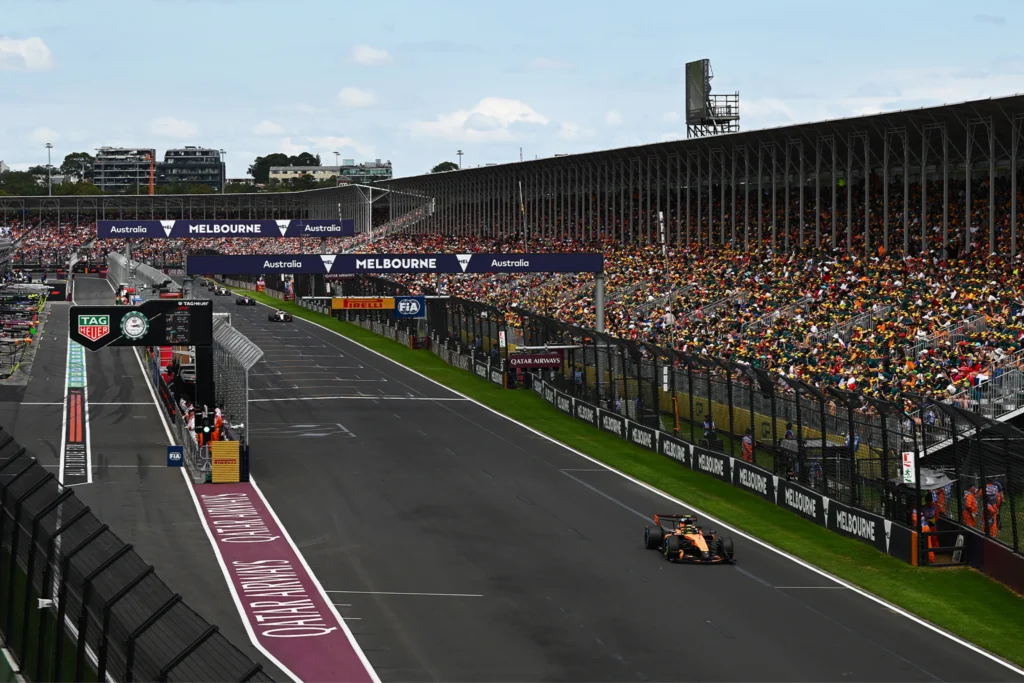
Even before the five lights went out, Albert Park was reminded how brutal home races can be. Oscar Piastri, fifth on the grid, crashed into the wall on his way to the grid and inflicted so much damage on his McLaren that he was forced to withdraw before the start, a heartbreaking end to his home weekend before it had even begun. “It’s pretty disappointing,” he said later. “I’m trying to understand what really happened, that’s the most important thing… For the fans it’s obviously very disappointing. I’m sorry for them. I would have liked to show what I can do. It’s just very disappointing.”
Fernando Alonso added to the sense of confusion with a strange in‑and‑out episode at Aston Martin, briefly returning to the garage as if to retire before rejoining and ultimately stopping for good after mid‑distance. Alongside Bottas and Hadjar, his name joined the list of five official retirements that underlined how unforgiving the new 2026 machinery can be over a race distance.
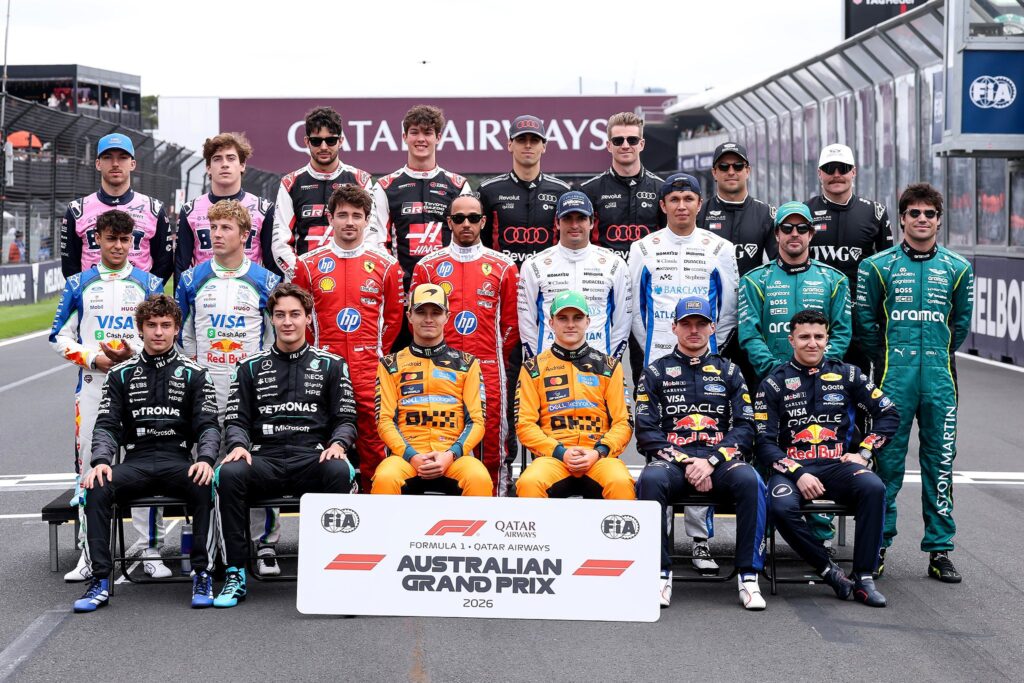
Taken as a whole, the 2026 Australian Grand Prix felt like a microcosm of F1’s latest reboot: wild swings in performance, huge energy‑management swings on the straights, and a clear yet not unbridgeable gap from Mercedes to the chasing pack. Russell’s calm authority, Antonelli’s composure, Ferrari’s flashes of brilliance, Verstappen’s fury‑fuelled climb and the rookies’ bravery combined to produce a race that was as intriguing strategically as it was spectacular on track. If Melbourne is any guide, the new era will be as demanding for engineers and strategists as it is for the drivers – and, for now, Mercedes are the reference everyone else must chase.