 Atanaria
There’s a moment on Maui when you realize the island is dripping.
Not metaphorically — literally. Water spills off cliffs, seeps through jungle walls, slides across black lava rock, and drops suddenly out of the sky. Follow the right roads and trails and you’ll start to notice a pattern: every bend seems to end in a waterfall.
This is not a single, marked path. It’s a loose, meandering journey — part drive, part hike, part wandering — and it’s one of the most beautiful ways to experience Maui.
The Road That Teaches You to Slow Down
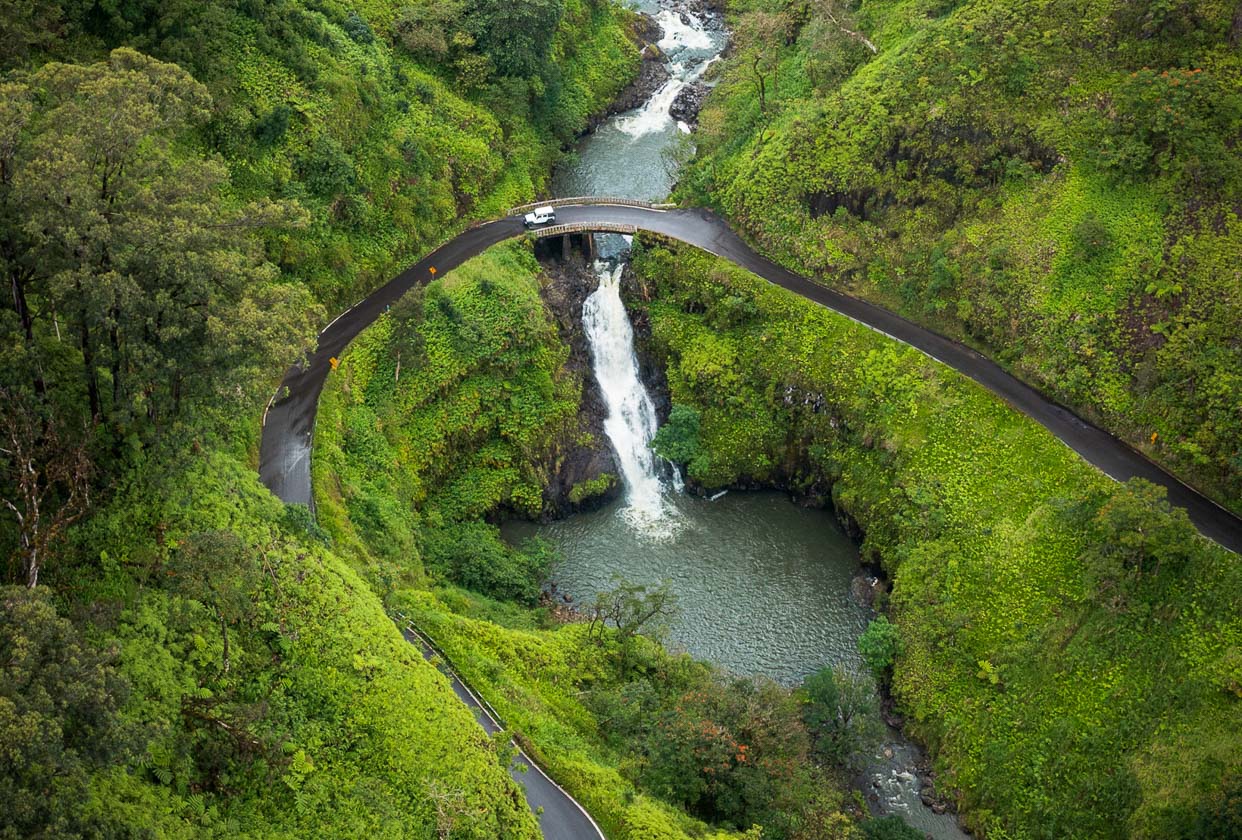
The adventure begins almost without warning. You leave the wide, sunny roads behind and suddenly you’re on the Road to Hana, creeping along a ribbon of pavement squeezed between rainforest and ocean. The windows stay down. Everything smells green.
Waterfalls appear the way good surprises do — unannounced.
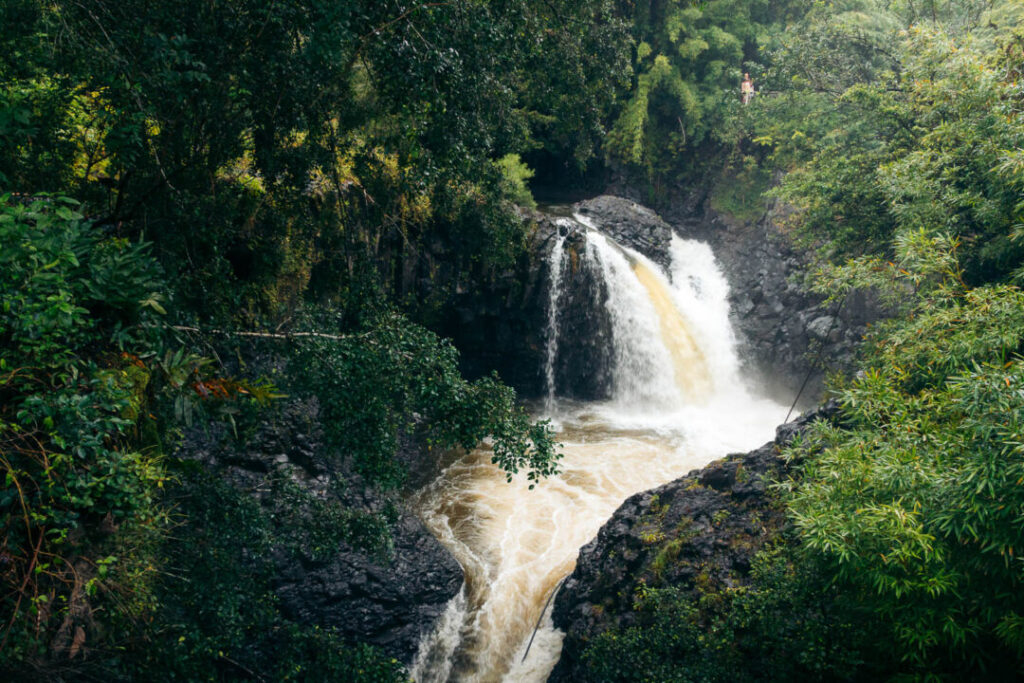
At Twin Falls, the sound of rushing water pulls you off the road before you’ve fully settled into the drive. A short walk through guava trees leads to pools where the water is cool and brown-green, and nobody seems in a hurry. Further along, you spot waterfalls straight from the car — thin white ribbons clinging to cliffs, thick columns dropping into unseen gulches.
You stop when you feel like stopping. That’s the rule.
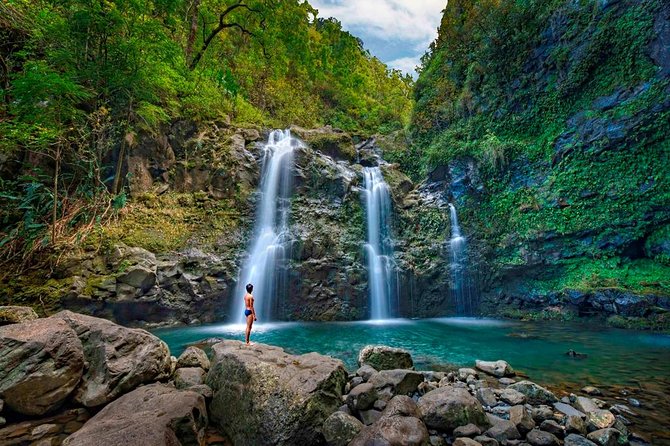
Sometimes it’s a quick pull-over to stare at Upper Waikani Falls, three streams spilling side by side like they planned it. Other times it’s a longer pause at Puaʻa Kaʻa, where a few steps lead to shaded pools and picnic tables that beg you to linger.
The road itself becomes part of the experience — narrow bridges, sudden rain showers, bursts of sunlight that make the leaves glow. The waterfalls don’t feel like destinations. They feel like companions.
Where the Road Ends and the Forest Takes Over
Past Hana, the pavement roughens and the island grows quieter. Here, the journey shifts from driving to walking.
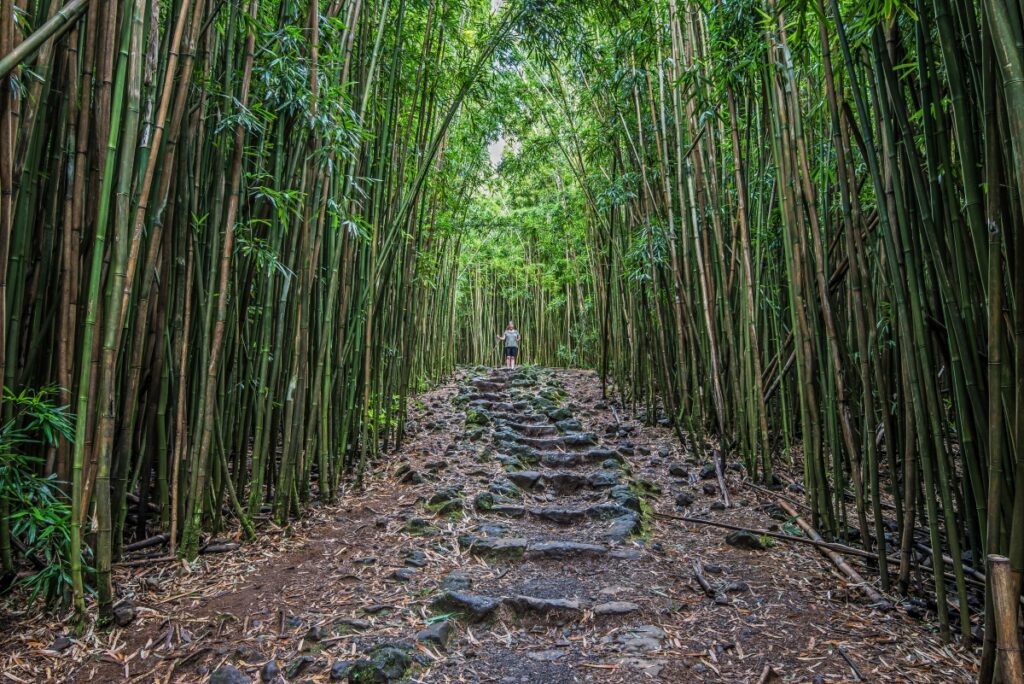
The Pīpīwai Trail starts gently, almost politely, before pulling you deeper into the forest. The ground changes underfoot. The air thickens. Bamboo groves rise up and sway, knocking together in the wind like hollow chimes.
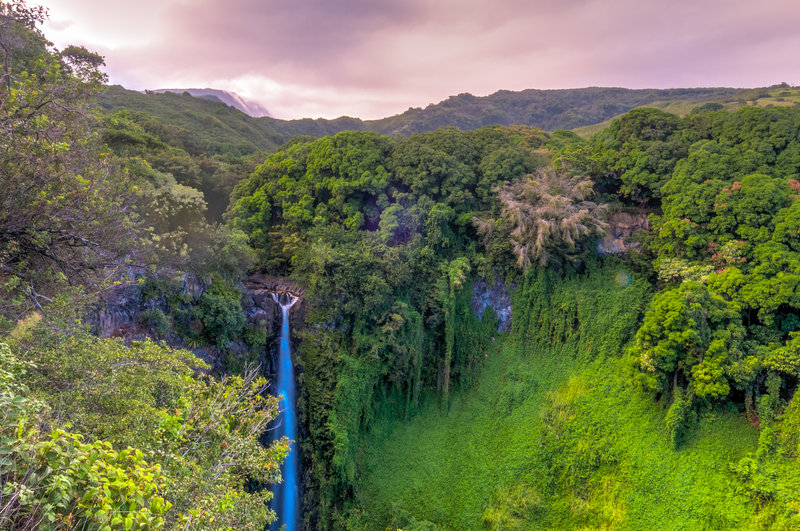
Half a mile in, Makahiku Falls reveals itself — tall, elegant, framed by vines and moss. It’s impressive, but it’s not the point. Everyone keeps going.
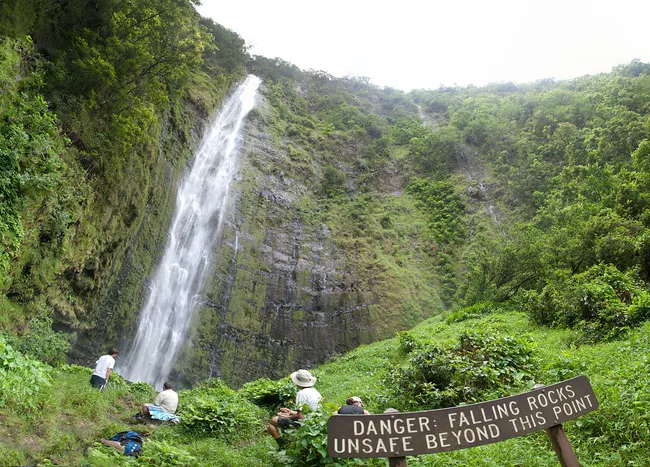
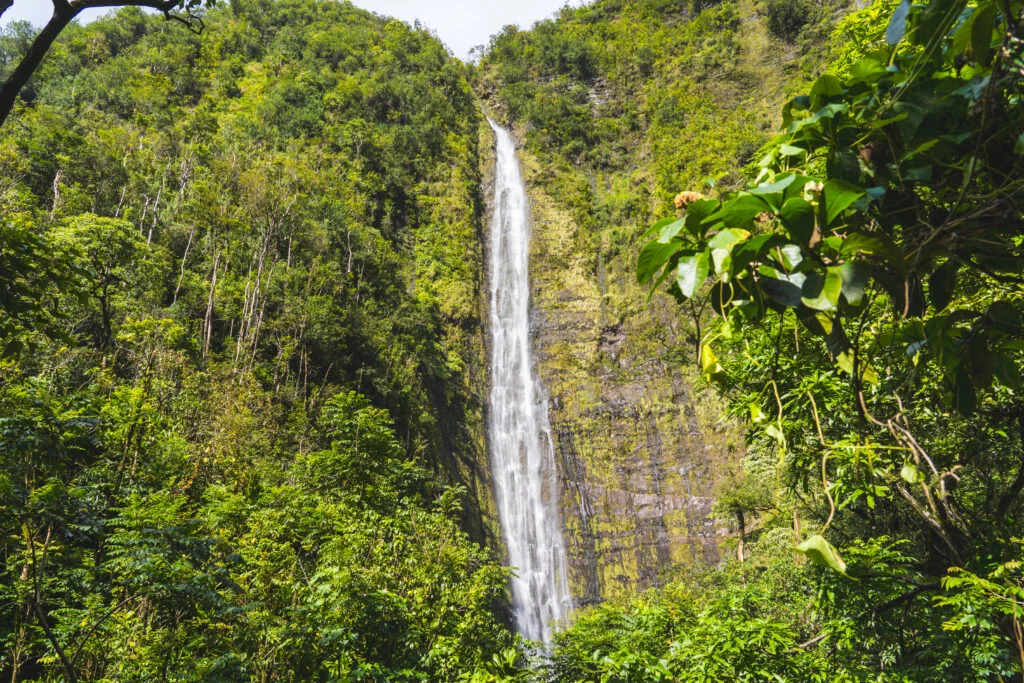
And then, after miles of boardwalks, roots, and streams, you hear it before you see it. Waimoku Falls crashes down a sheer cliff, a silver ribbon falling nearly 400 feet into a rock amphitheater. No pool to swim in. No easy photo that does it justice. Just power and sound and mist drifting across your skin.
You don’t stay long. Somehow it feels like a place you visit briefly, out of respect.
The Waterfalls You Have to Work For
Away from the famous routes, Maui keeps some of its best waterfalls quieter.
Up in the valleys near Waiheʻe, trails climb ridges and cross streams again and again. Somewhere below, Makamakaʻole Falls hides — tall, layered, and wild. Reaching it takes effort, muddy shoes, and a willingness to get lost just a little. The reward is solitude and the feeling that you’ve stepped into Maui’s backstage.
These aren’t places you rush. They’re places where you sit on a rock, listen to the water, and realize you’ve stopped checking the time.
What the Water Teaches You
Chasing waterfalls on Maui isn’t about ticking them off a list. It’s about learning the island’s rhythm — slow, unpredictable, and alive.
Rain comes and goes. Trails get slick. Plans change. The waterfalls grow louder after a storm and quieter in the sun. You adjust. You wait. You watch.
And somewhere between the road and the forest, between the roar of falling water and the hush that follows it, Maui shows you something rare: how good it feels to let the journey decide where you stop.

Before You Go: Practical Notes for Waterfall Chasers
Maui’s waterfalls are beautiful, but they’re also shaped by weather, terrain, and time. A little planning goes a long way toward keeping the experience magical rather than stressful.
When to go:
Late winter through early spring (roughly January to April) brings the most dramatic flows thanks to seasonal rains. Summer offers clearer skies and easier driving, but some waterfalls may shrink to gentle streams.
Start early:
Popular stops along the Road to Hana fill up quickly. An early morning start means fewer crowds, easier parking, and better light filtering through the forest.
Swimming wisdom:
Not all waterfall pools are safe for swimming. Heavy rain can cause sudden flash floods, and some areas have strong currents or falling rocks. When in doubt, admire from a distance and follow posted warnings.
Respect the land:
Many waterfalls lie near culturally significant sites or on private land. Stay on marked trails, don’t trespass, and leave everything as you found it. Maui’s beauty depends on mālama ʻāina — caring for the land.
Fuel and supplies:
Gas stations and food options become scarce past Paʻia and Hana. Fill up early, pack water, and bring snacks so you can linger without worry.
With a bit of preparation, Maui’s waterfalls transform from quick photo stops into moments you’ll remember long after the road dries and the mist settles.

A roadmap
The Road to Hana — A Waterfall Lover’s Paradise
- Twin Falls – This lush duo of falls is one of the first waterfall stops after leaving Kahului, with a relatively short jungle path leading to emerald pools perfect for brief dips and photos.
- Haipua’ena Falls – A 25-foot cascade tucked past mile marker 11, reached by a short and gentle trail through dense foliage.
- Upper Waikani Falls (Three Bears) – Named for its three parallel streams, this stunning waterfall is visible from the highway and offers a brief but scenic path down to its pool.
- Ching’s Pond & Falls and Pua’a Ka’a Falls – Smaller but serene spots with tranquil water and plenty of photo opportunities.
- Wailua Falls – Often described as one of Maui’s most picturesque waterfalls, its dramatic plunge makes a perfect break on the afternoon journey.
These waterfalls are spread along a route that’s as much a destination as the individual stops — each turn reveals ocean vistas, rainforest valleys, and hidden lookout points.
Pīpīwai Trail : A Trek Through Waterfall Wonderland
- Makahiku Falls – About 0.5 miles along the trail, this 185-foot horsetail waterfall emerges from the rainforest with dramatic effect.
- Banyan Grove – Along the way you’ll pass under ancient banyan trees — branches and roots weaving a natural canopy above the trail.
- Waimoku Falls – At the trail’s end, this towering 400-foot waterfall crashes down a sheer cliff face, a true highlight of Maui’s waterfall circuit.
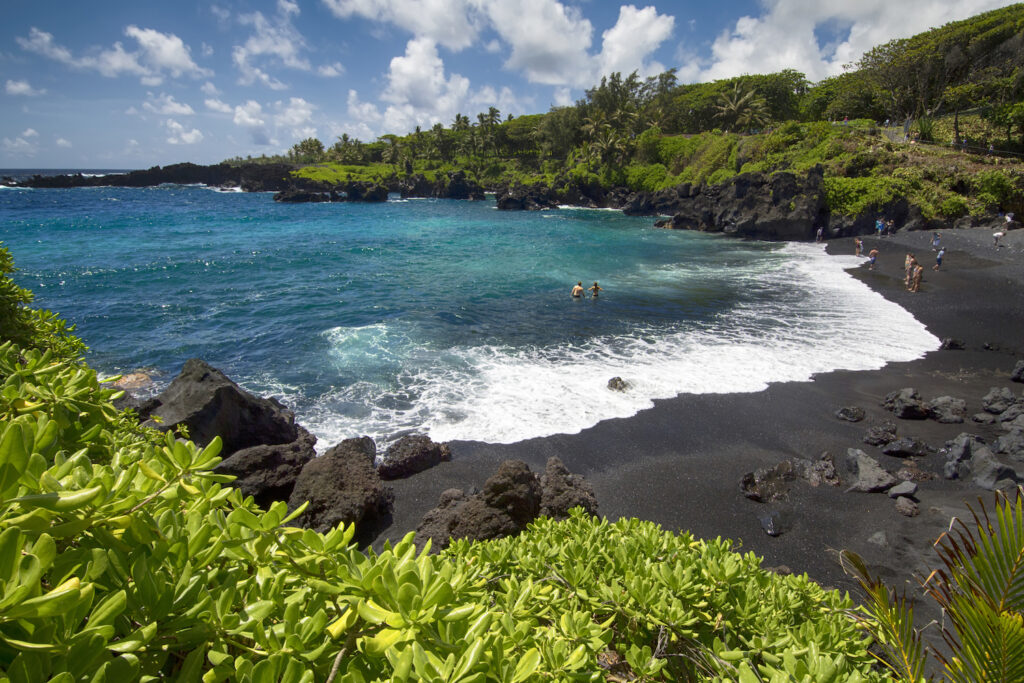
- Honokalani Black Sand Beach – Located in Waianapanapa State Park, it is one of the most exceptional beaches we could recommend! After a very long drive around the island, it is a well deserved break with a magnificent view to behold for years!
The full round trip covers roughly 4 miles, with gentle elevation gain and board-walked sections that soften muddy patches. Hikers often linger at viewing points to soak in the surroundings before returning.
Some Trails Less Traveled And Their Hidden Waterfall Gems
Beyond the Hana corridor and the Pīpīwai Trail are lesser-known waterfalls that reward adventurers who seek solitude and deeper wilderness.
- Makamaka’ole Falls – Accessible via hikes like the Waihee Ridge Trail or the more rugged 13 Crossings Trail, this multi-tiered waterfall drops about 270 feet amid deep forest valleys.
- Punalau Falls – This roughly 100-foot cascade lies off the beaten path near mile marker 13, reachable via an upstream scramble through rocky terrain.
These trails tend to be more challenging but offer profound rewards: lush solitude, pristine nature, and the sense of discovering a hidden corner of Maui’s island magic.
Tips for Your Waterfall Adventure
- Plan for weather: Maui’s rainforest climate means sudden showers are likely — and they can intensify waterfalls dramatically.
- Wear sturdy footwear: Trails can be muddy, rocky, and slippery near water.
- Safety first: Flash floods and slick rocks around waterfalls can be dangerous — approach water edges with caution and be wise.