 Atanaria
There is a very specific pleasure in watching a film that knows exactly how ridiculous it is and commits anyway. They Will Kill You arrives like a splatter-painted dare: a high-rise death trap, a heroine with unfinished business, rich people who seem to have mistaken cruelty for interior design, and enough practical gore to make the floorboards look haunted. It is not trying to reinvent the action genre. It is trying to sprint, stab, crawl, and lunge through it with style. And because Zazie Beetz is at the center of the whole business, the film ends up feeling less like a machine for violence than a strange, bruised little showcase for control.
Beetz has always had a quiet magnetism, the sort that makes deadpan feel like a form of power rather than detachment. Here, as Asia Reaves, she carries that energy into a role built on physical endurance and emotional compression. Asia is newly out of prison, haunted by the younger sister she was forced to leave behind, and working a maid job in the gleaming, suspiciously over-designed apartment building known as The Virgil. That premise is classic pulp territory: one woman, one building, one buried past, and the sense that every polished surface is about to start bleeding.
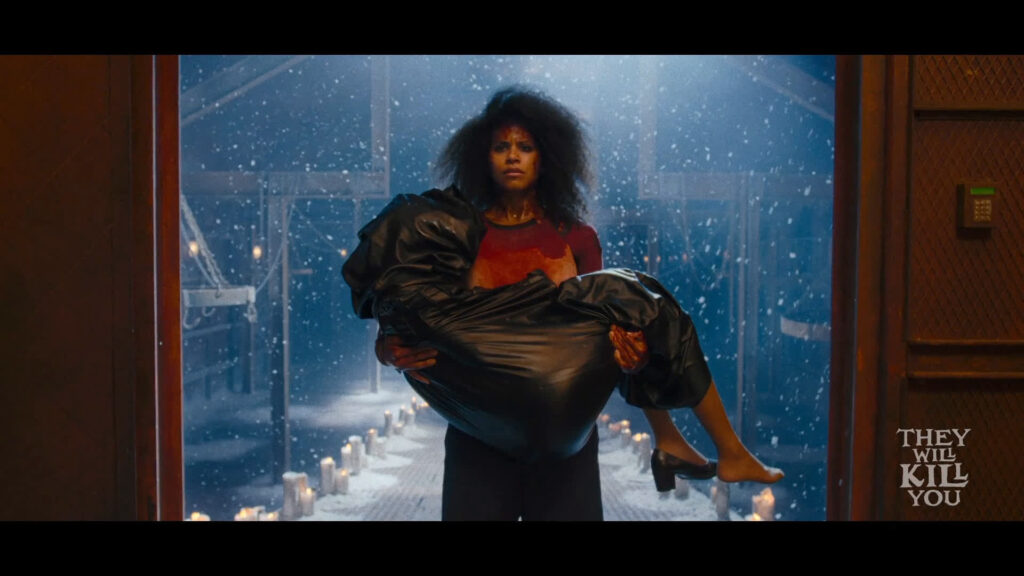
What distinguishes the film from the endless crowd of recent lone-warrior revenge stories is not subtlety, exactly, but texture. Director Kirill Sokolov does not merely stage violence; he gives it a choreography of scrapes, thuds, and off-balance momentum. Asia does not move like an untouchable superhero. She moves like someone thinking through survival one split second at a time. That small difference matters. It keeps the film from floating away into pure cosplay and gives the action a bodily credibility that most comic-book-adjacent mayhem never bothers to earn.
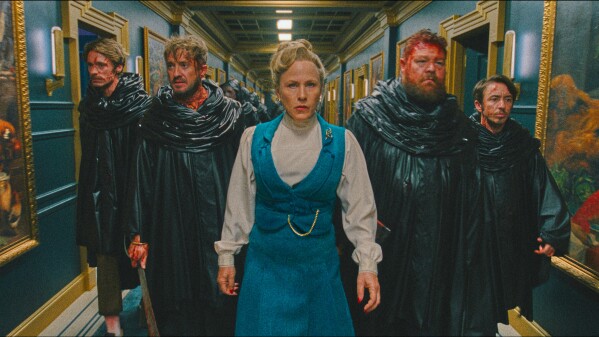
The Virgil itself is one of those wonderfully malignant movie spaces, a building that functions like a social hierarchy in architectural form. It is sleek, rich, and deeply unwelcoming, the kind of place where wealth has been arranged so carefully it begins to feel like a trap. Lilith, the building’s head of staff, played by Patricia Arquette with a conspicuously odd accent, presides over the place with polished menace, while tenants like Sharon and Kevin embody a different species of threat: not faceless henchmen, but entitled predators with enough money to make their cruelty feel casual. That choice shifts the film away from simple anti-rich satire and toward something nastier and more interesting, even if it never fully sharpens its social critique.
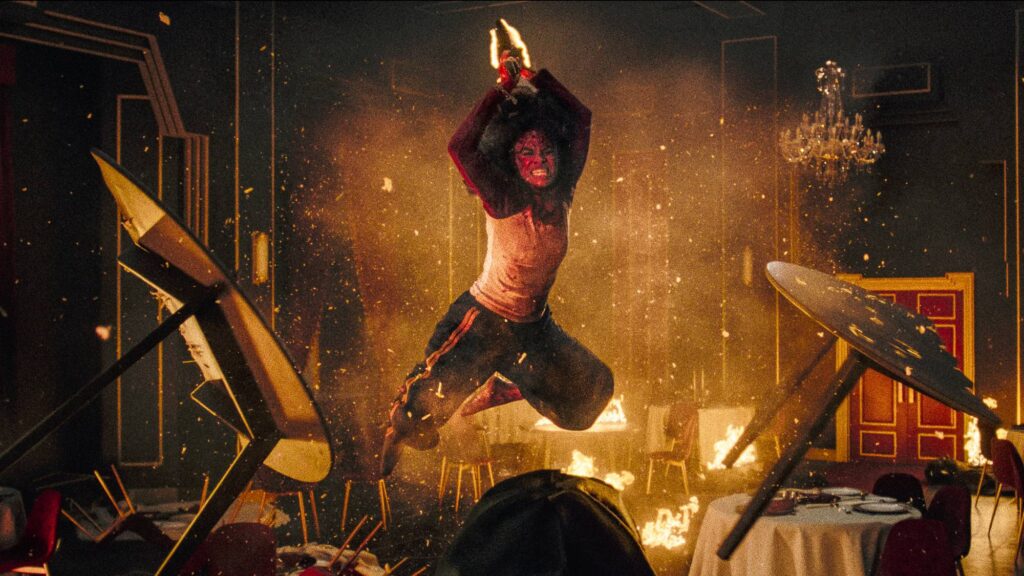
If the film’s politics are a little blunt, its energy more than compensates. They Will Kill You thrives when it stops talking and starts colliding. Sokolov seems to understand that action cinema often gets weaker the more it explains itself, so he repeatedly allows images to do the work. Asia sliding across floors, pinballing through narrow corridors, and fighting in near silence gives the movie its best rhythm. When the script does lean on dialogue, it occasionally reaches for the kind of forced toughness that feels imported from a dozen better action movies. But the film’s visual intelligence keeps pulling it back toward something sharper and stranger.




The horror influence is what gives the movie its most vivid identity. This is not merely a revenge film with blood in it; it is an action movie that occasionally remembers it can be grotesque, funny, and properly nasty. The practical effects are part of the appeal, especially when the violence becomes gloriously excessive rather than merely efficient. A tunnel sequence, in particular, pushes the film into a delirious space where action and creature-feature unease start feeding each other. The result is less slick than some of its peers, but also more alive.
There is also something bracing about how the film treats exploitation. It knows Asia is being looked at, tested, and cornered, and it knows the genre itself often turns women into surfaces for suffering. But Beetz’s performance refuses passivity. Even when the camera lingers on vulnerability, the character never becomes only a body in danger. She remains strategic, alert, and irritably human. That balance is the film’s great asset: it asks us to watch a woman endure the worst possible circumstances without reducing her to an icon of suffering.
Still, the movie does not escape the limits of its own design. Once the central premise has been exposed, some of the later developments feel more like escalation for its own sake than true discovery. The building could have been even more expansively used, and the sister storyline, while emotionally functional, is too familiar to generate much surprise. These shortcomings are real, but they are not fatal. The film is not built on psychological nuance; it is built on propulsion, appetite, and the weird satisfaction of watching a seemingly cornered person keep finding new angles.
In that sense, They Will Kill You is less a reinvention than a sharpening. It takes a well-worn subgenre and gives it a face, a pulse, and a physical style that feels distinct enough to remember. Zazie Beetz is the reason it works. She makes Asia feel both armored and exposed, capable and outmatched, funny and furious. Around her, the film becomes a glossy chamber of violence where every corridor leads to another test and every test seems designed to see how much grace can survive the wreckage. By the end, that grace is what lingers most. Not the blood, not the gimmick, not even the twist — just the sight of Beetz moving through the wreckage as if refusing to let the film own her.