 Atanaria
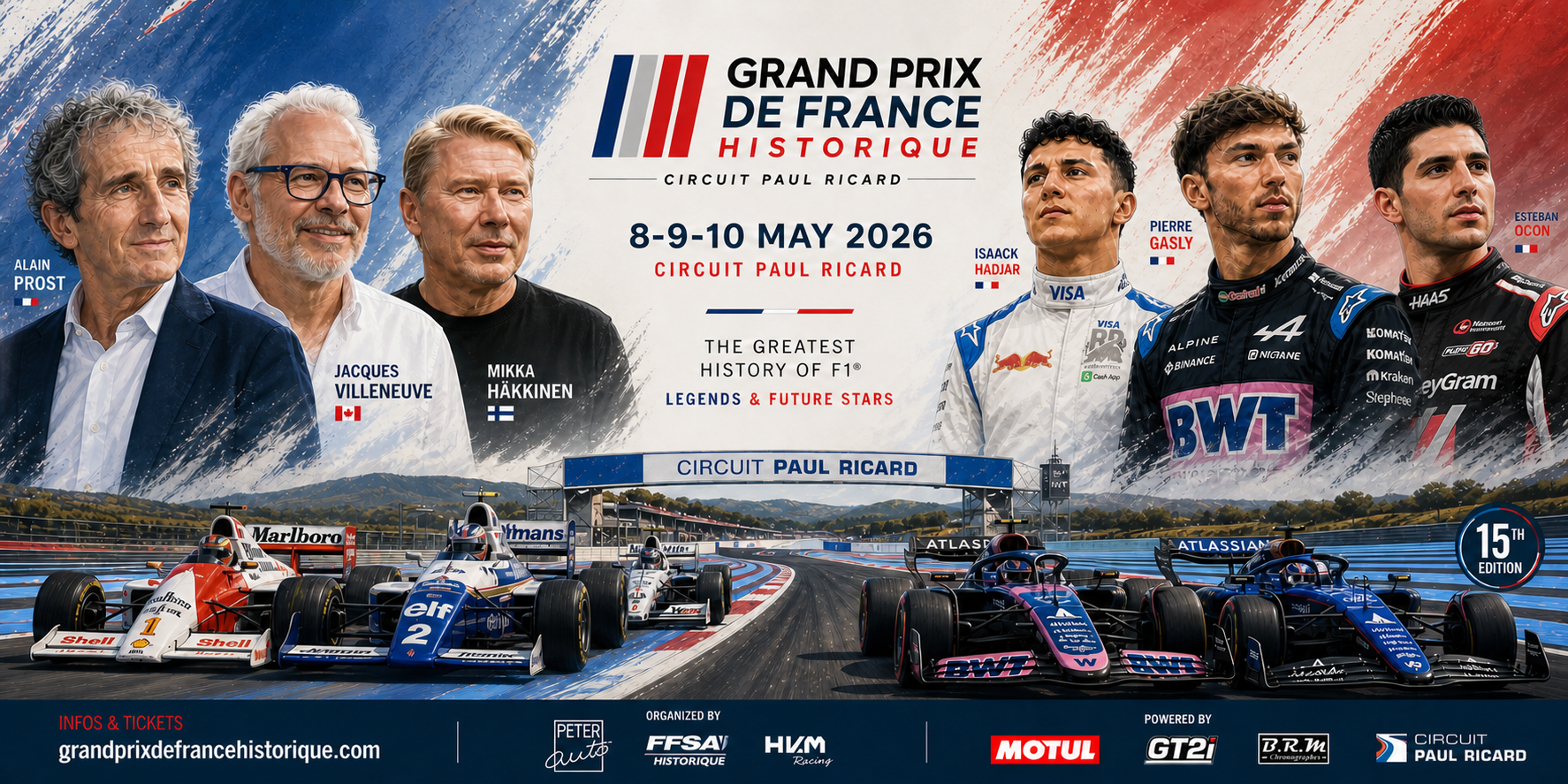
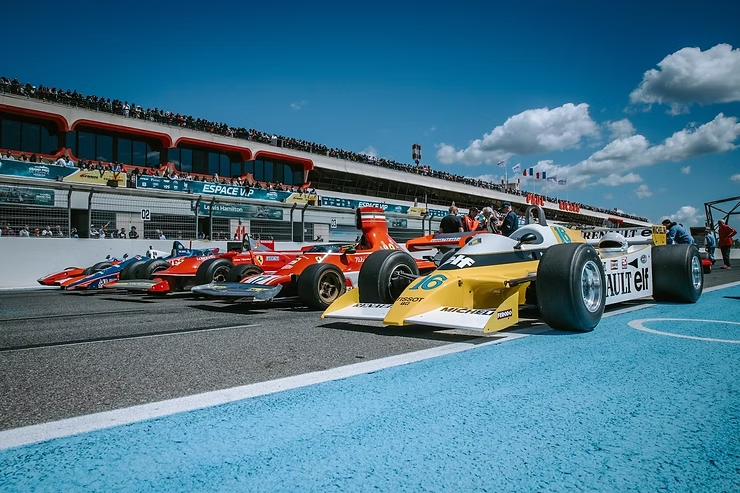
From 8 to 10 May 2026, the Circuit Paul Ricard at Le Castellet will once again become a living theatre of Formula 1 history as the Grand Prix Historique de France returns with a three-day schedule built around practice, qualifying, races and headline demonstrations. More than 200 cars are expected across the weekend, including around 60 historic Formula 1 machines, giving the event the scale and rhythm of a true Grand Prix rather than a static heritage gathering.
What continues to set the event apart is its ability to place several generations of single-seaters on the same stage, taking spectators from 1970s Formula 1 through to the early 2000s in the space of a single afternoon. At Paul Ricard, the atmosphere is defined as much by sound as by speed, with naturally aspirated V8, V10 and V12 engines restoring a sensory dimension that many fans feel modern Formula 1 has left behind.
For us, independant Formula 1 medias, the appeal is obvious : this is not simply an exercise in nostalgia, but a premium motorsport weekend where heritage, access and live action meet in a refined setting. The programme runs almost continuously over three days, allowing visitors to move from paddock encounters to on-track sessions without losing the pulse of the event.
Friday 8 May: preparation and first pecking order
Friday is the day for purists, when the weekend’s machinery settles into rhythm and the first competitive hierarchy begins to emerge. The morning is devoted to practice sessions for historic sub-2-litre single-seaters, pre-2000 GT and prototype cars, Formula 3 Classic, Formula 2 Classic and historic Formula 1.
Qualifying begins before midday and continues into the afternoon, progressively sharpening the pace across the grid as the drivers refine braking points, lines and set-up choices. With attendance generally lighter than on the weekend’s peak day, Friday also offers one of the best opportunities to enjoy the paddock atmosphere and observe the cars at close range.
Friday timetable
- 08:40 – Historic single-seaters under 2 litres: free practice.
- 09:15 – Pre-2000 GT & Prototypes: practice.
- 09:50 – Formula 3 Classic: practice.
- 10:25 – Formula 2 Classic: practice.
- 11:00 – Historic Formula 1: practice.
- 11:35 – Historic single-seaters under 2 litres: qualifying.
- 12:10 – GT & Prototypes: qualifying.
- 13:30 – Formula 3 Classic: qualifying.
- 14:05 – Formula 2 Classic: qualifying.
- 14:40 – Historic Formula 1: qualifying.
- 15:15 – Additional multi-grid sessions.
- 16:30 – Final free running sessions.
- 17:30 – End of day.
Saturday 9 May: the weekend comes alive
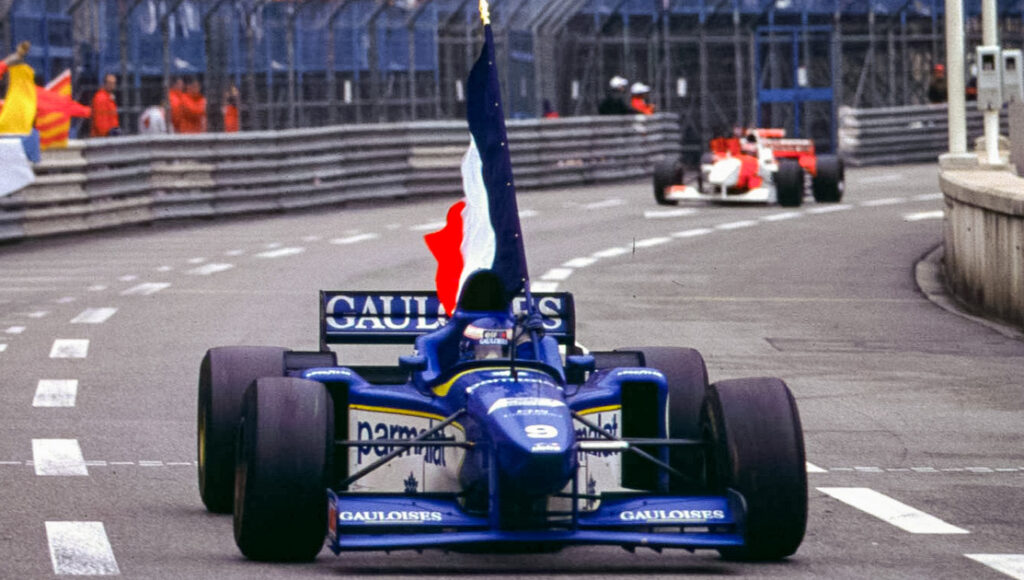
Saturday is when the Grand Prix Historique de France fully opens up as a spectacle, with the first races bringing a sharper competitive edge to the weekend. Formula 3 Classic and Formula 2 Classic traditionally launch the racing programme before the historic Formula 1 grids take centre stage in successive races that showcase very different eras, sounds and driving styles.
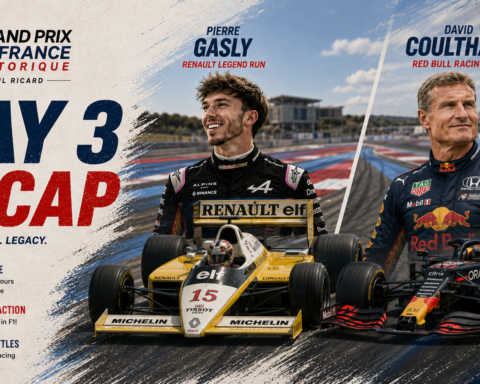
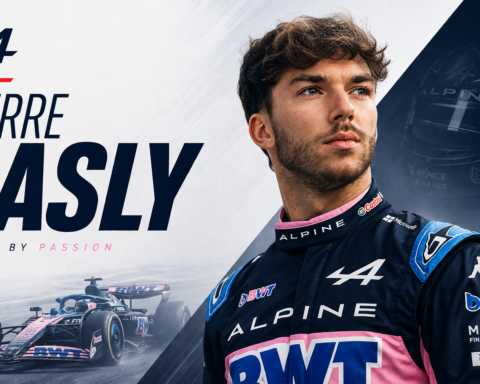
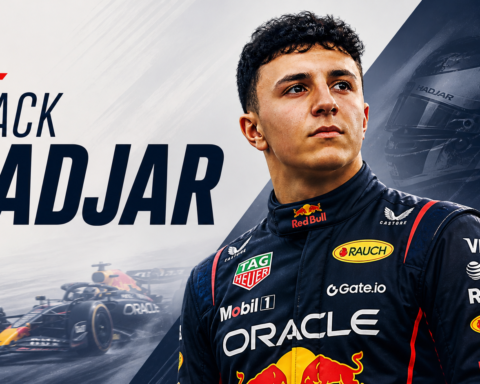
The day’s most talked-about demonstration is already set to bridge past and present in dramatic fashion, with Isack Hadjar announced at the wheel of the Red Bull RB7, the car that won the 2011 Formula 1 World Championship. That modern Formula 1 presence will be reinforced by a prestigious roster of current circuit guests including Pierre Gasly, Esteban Ocon, Laurent Mekies and Alan Permane, whose attendance brings added relevance and visibility to an event already rich in heritage.
Saturday also includes the popular “Fast & Famous” session, where invited names take part in high-profile demonstration runs, as well as the champions’ parade, which remains one of the emotional high points of the meeting. For readers and partners alike, it is the day that best captures the event’s identity: competitive, celebratory and unmistakably grand in tone.
Saturday timetable
- 08:30 – Formula 3 Classic warm-up.
- 09:00 – Formula 2 Classic warm-up.
- 09:30 – Historic Formula 1 warm-up.
- 10:00 – Race 1, Formula 3 Classic.
- 10:40 – Race 1, Formula 2 Classic.
- 11:20 – Historic Formula 1 race, Grid 1.
- 12:00 – GT / Prototype race.
- 13:30 – Modern Formula 1 demonstration: Red Bull RB7 with Isack Hadjar.
- 14:00 – Fast & Famous session with guest drivers.
- 14:40 – Historic Formula 1 race, Grid 2.
- 15:20 – Historic single-seaters under 2 litres race.
- 16:00 – Champions’ parade.
- 16:40 – GT / Prototype endurance race.
- 17:30 – End of day.
Sunday 10 May: finals and defining moments
Sunday concentrates the decisive races and the closing ceremony of the weekend, giving the meeting its final competitive shape. Second races for Formula 3 Classic and Formula 2 Classic are followed by the historic Formula 1 finals, which often provide the strongest images and the most intense on-track action of the event.
GT and prototype racing adds a strategic endurance element to the programme, while the return of the Red Bull RB7 demonstration and the Fast & Famous session ensure the final day retains its showpiece quality. The official podiums and final champions’ parade then bring the 2026 edition to a close with the mix of satisfaction and nostalgia that defines the Grand Prix Historique experience.
Sunday timetable
- 08:30 – General warm-up.
- 09:00 – Race 2, Formula 3 Classic.
- 09:40 – Race 2, Formula 2 Classic.
- 10:20 – Historic Formula 1 final, Grid 1.
- 11:00 – GT / Prototype race.
- 13:30 – Red Bull RB7 demonstration.
- 14:00 – Fast & Famous session.
- 14:40 – Historic Formula 1 final, Grid 2.
- 15:20 – Historic single-seaters under 2 litres race.
- 16:00 – Final champions’ parade.
- 16:30 – Official podiums.
- 17:00 – Event close.
Drivers, guests and atmosphere
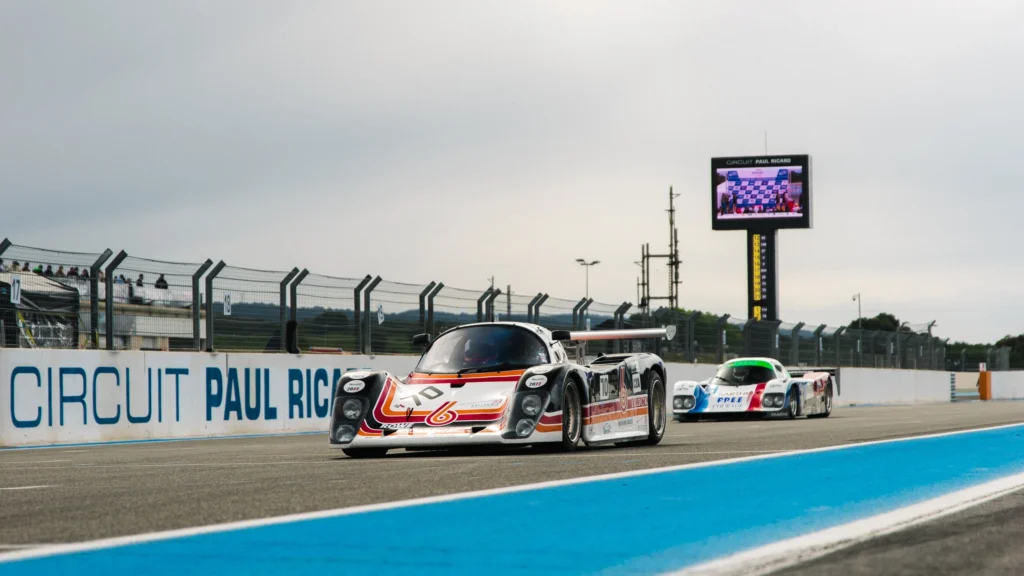
One of the event’s enduring strengths is that it does not rely on a fixed modern-style Formula 1 entry list, but on a carefully balanced mix of competing drivers and prestigious guests. The original programme article notes that names such as Alain Prost, Jean Alesi, René Arnoux, Jacques Villeneuve, David Coulthard and Mark Webber are regularly associated with the Castellet meeting, underlining the calibre of personalities that historically gravitate towards it.
For 2026, the announced appearance of Isack Hadjar already gives the event a strong connection to the current Formula 1 landscape. Alongside him, the presence of Pierre Gasly, Esteban Ocon, Laurent Mekies and Alan Permane would give the paddock a particularly distinguished modern accent, adding prestige for fans, hospitality guests and commercial partners in equal measure.
A heritage event with contemporary reach
In just a few years, the Grand Prix Historique de France has established itself as one of Europe’s standout meetings for historic single-seaters. Its success lies in its balance: neither a museum piece nor a pure competition event, but a hybrid format in which history is expressed through movement, sound and genuine track action.
At Le Castellet, Formula 1 is not kept behind glass; it is seen, heard and felt at speed. That is precisely why the event continues to draw a loyal public, and why the 2026 edition already looks set to deliver a weekend of rare quality for enthusiasts, guests and sponsors alike.
A note of thanks
As this latest edition approaches, sincere thanks are due to the Grand Prix Historique de France for the consideration it continues to show independent media outlets from year to year. Their willingness to welcome publications such as ours and to recognise the value of committed, specialist press coverage helps preserve not only the event’s visibility, but also the spirit in which its story is shared.
The 2026 meeting will mark a third attendance and on-site coverage for this magazine, a milestone that is approached with genuine appreciation and enthusiasm. Returning to Le Castellet once again is both a professional pleasure and a privilege, and there is every expectation that this new edition will provide another memorable chapter in a relationship built on trust, passion and a shared respect for motorsport heritage.