 Atanaria
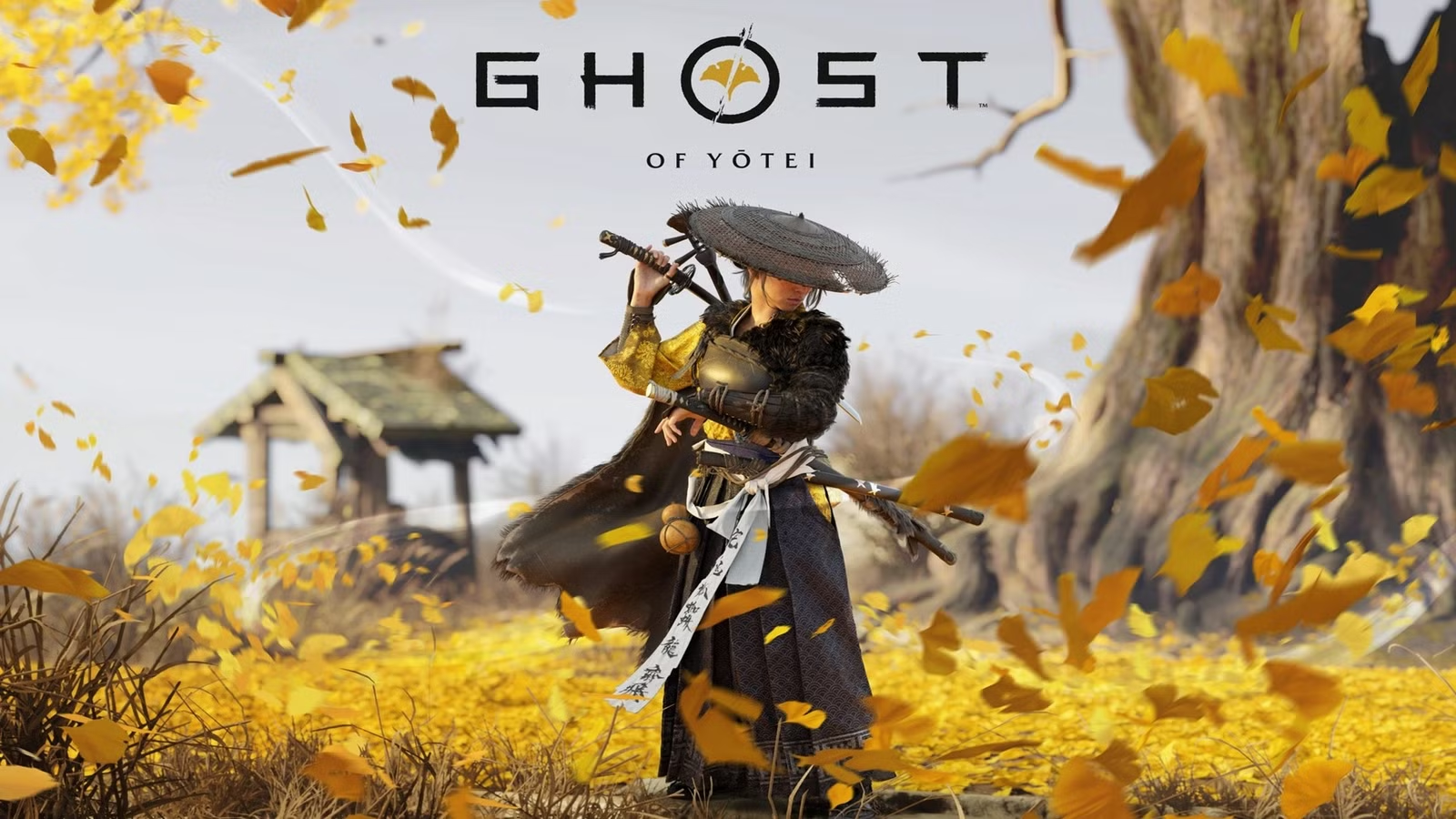
Ghost of Yotei is the kind of blockbuster sequel that understands the value of continuity without becoming trapped by it. Set 300 years after Ghost of Tsushima, it shifts the series into 1603, sends us north to Ezo, and places Atsu at the center of a revenge story that is familiar in structure but carefully sharpened in execution. What makes the game compelling is not the novelty of its premise, but the confidence with which it stages its emotional and mechanical ambitions: it wants to be a cinematic open-world epic, an absorbing character study, and a tactile action game, and for the most part it succeeds on all three fronts.
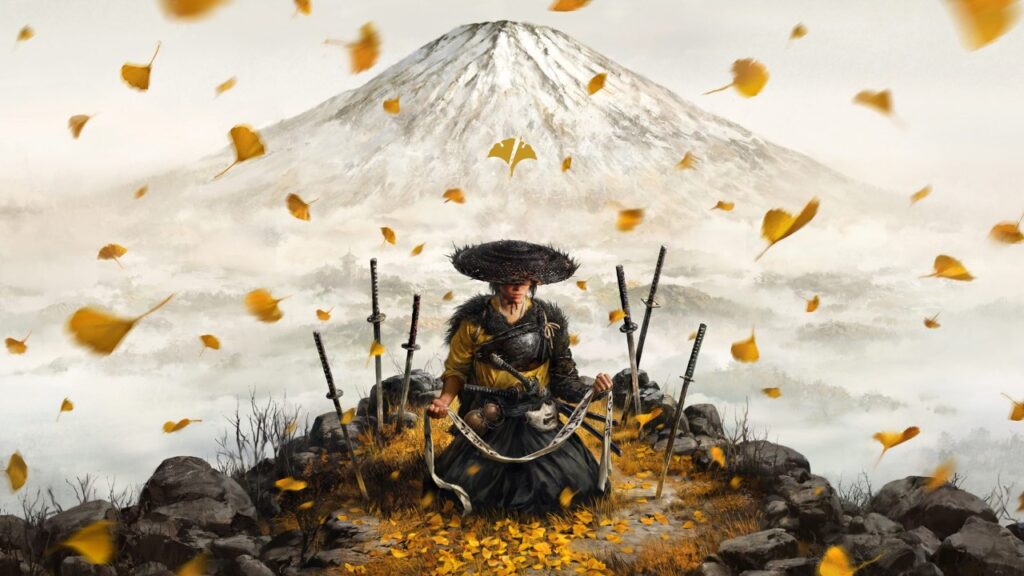
The article you provided describes a game that feels expansive without becoming bloated, and that impression aligns with the broader critical framing around Ghost of Yotei. Atsu’s quest is simple on paper—hunt down the Yotei Six, the outlaws responsible for her family’s death—but the journey becomes more layered as it crosses political conflict, local alliances, and the lived texture of Ezo itself. That structure matters because it gives the game a strong emotional spine: vengeance is the premise, but not the only subject. The better moments are those in which the game lets Atsu’s grief, resolve, and guarded humor emerge in small fragments, allowing her to feel less like a symbol and more like a person in motion.
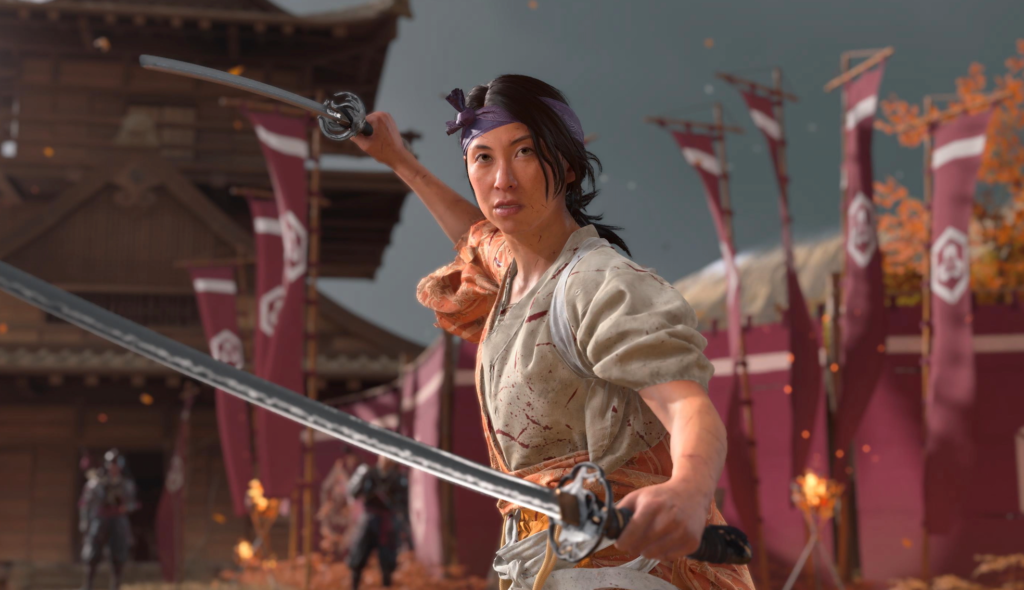
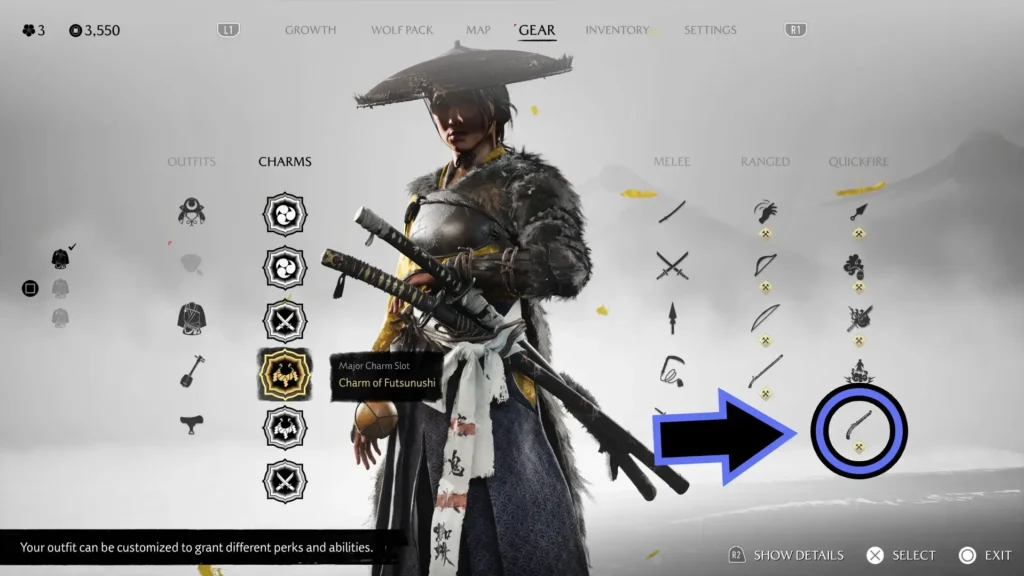
What most distinguishes Ghost of Yotei from its predecessor is the combat system. Sucker Punch has replaced the stance framework with five distinct melee weapons, including the katana, dual katanas, yari, odachi, and kusarigama, each obtained and mastered through specific encounters in the world. That design choice is more than cosmetic. It pushes players to read encounters more actively, since enemies now demand faster adaptation and smarter weapon switching rather than simply waiting for the “correct” stance to emerge. The result is a combat loop that feels broader and more expressive, especially when combined with firearms, ranged tools, throwables, standoffs, stealth assassinations, and the ability to turn enemy weapons against them in the middle of a fight.
This is where the game feels most modern. Instead of locking the player into one dominant rhythm, it encourages improvisation. A duel can begin with a standoff, fracture into melee chaos, and then open into a ranged exchange before collapsing into close-quarters panic. That flexibility gives combat a theatrical energy that suits the game’s samurai-influenced tone. It also makes the player feel physically embedded in Atsu’s journey, a sensation reinforced by the DualSense features and the larger sensory work of the PS5 version. Even the weapon economy is narratively satisfying: every tool feels like part of Atsu’s survival, not just a stat upgrade.
The game’s open-world structure is also notably strong. Ezo is not simply a map to be cleared, but a landscape built to reward drifting, detouring, and observing. The article emphasizes the number of bonds and systems available outside combat—merchants, a cartographer, a bounty broker, side missions, wolf dens, altars of reflection, hot springs, fox dens, and narrative encounters that deepen the world rather than merely decorate it. That breadth matters because the game avoids the sensation of a sterile collectible grid. Instead, it gives the impression that the player is moving through a living region where people, legends, and local histories overlap. This is one reason reviewers have repeatedly described Ezo as both beautiful and absorbing.
The bounty system, in particular, sounds like one of the game’s most effective structural devices. Rather than functioning as a simple contract board, it appears to weave smaller stories into the larger revenge narrative, with some targets becoming more than disposable side content. That is exactly the sort of design that keeps an open world from feeling mechanically hollow. When side content can later echo the main plot, the world feels authored rather than assembled. It also suits the tone of a cultural magazine review, because it suggests that the game is interested not just in throughput, but in memory, consequence, and the way local stories accumulate around violence.
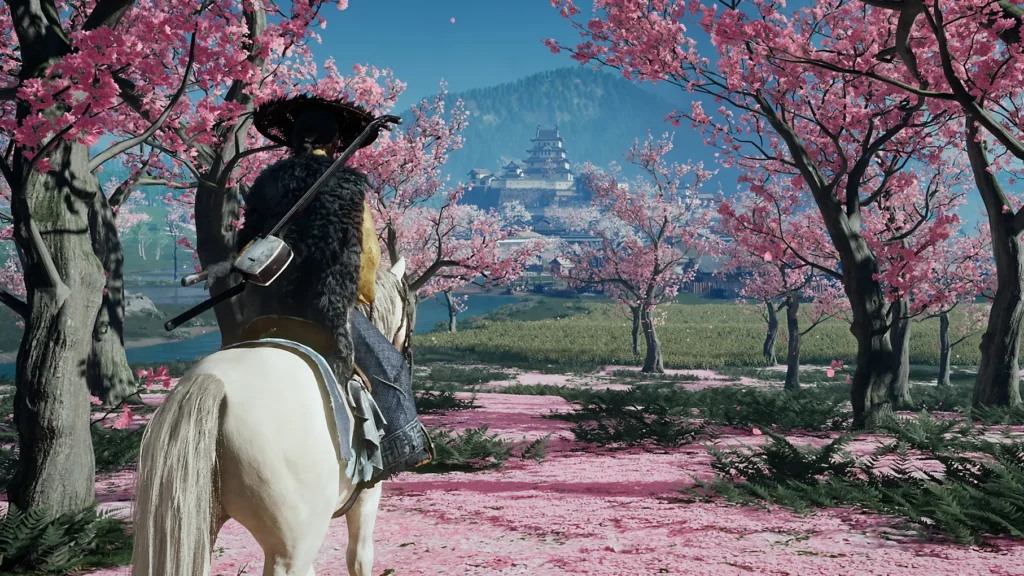
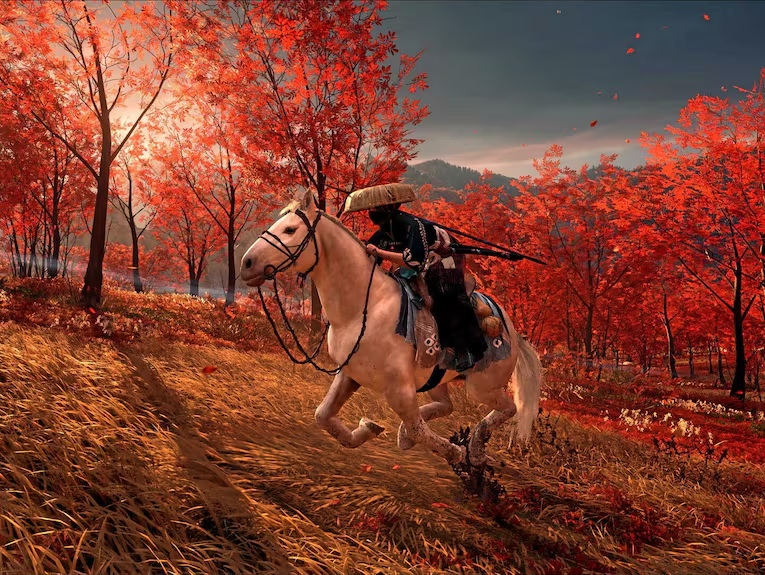
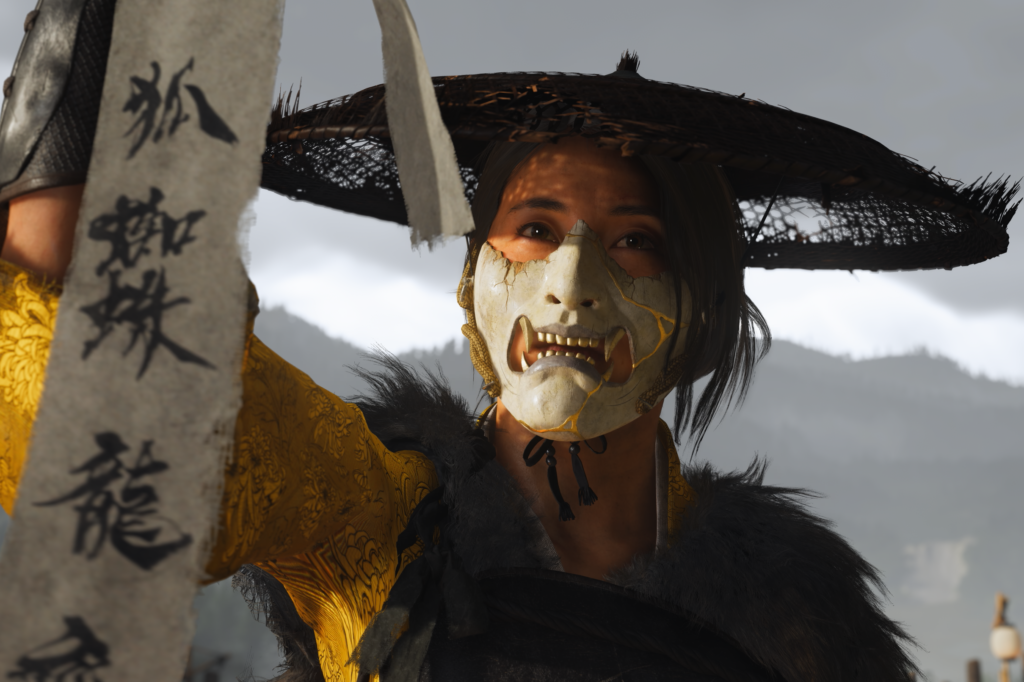
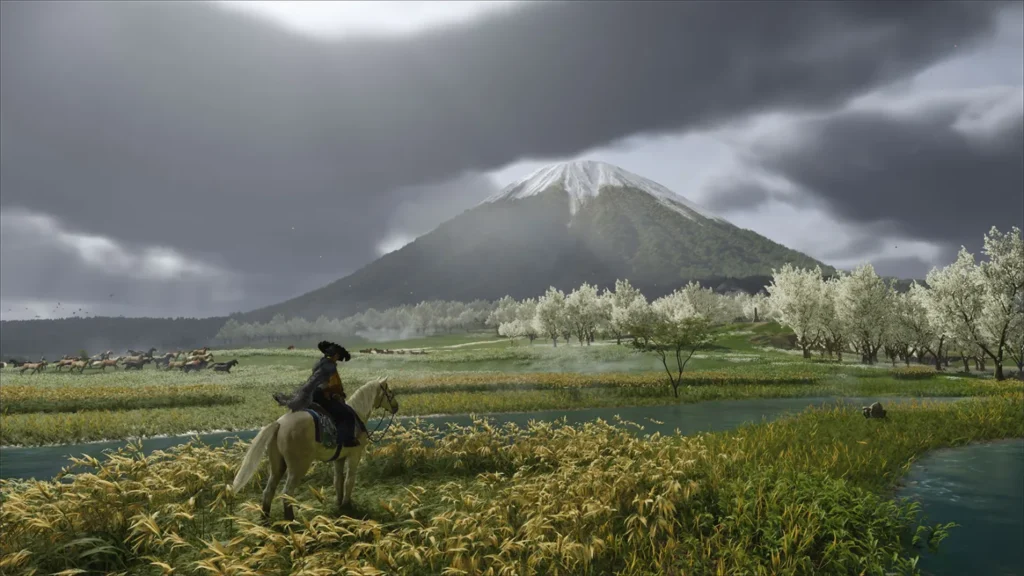
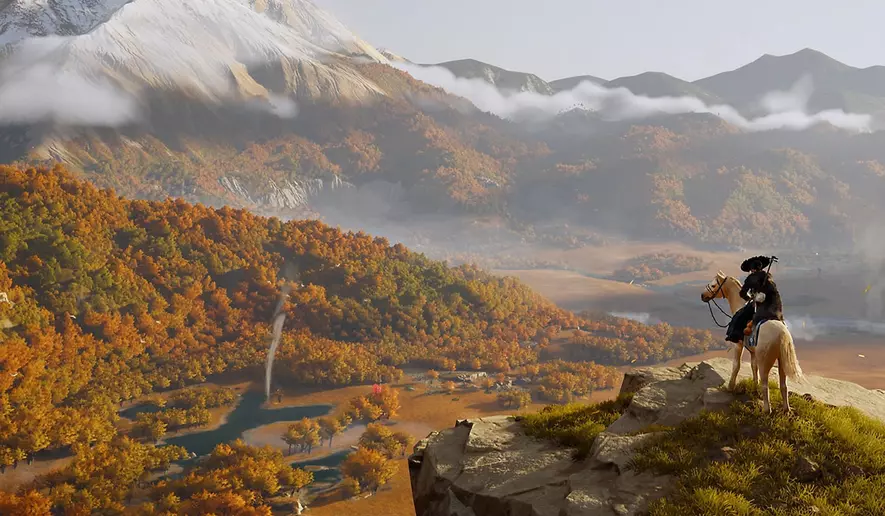
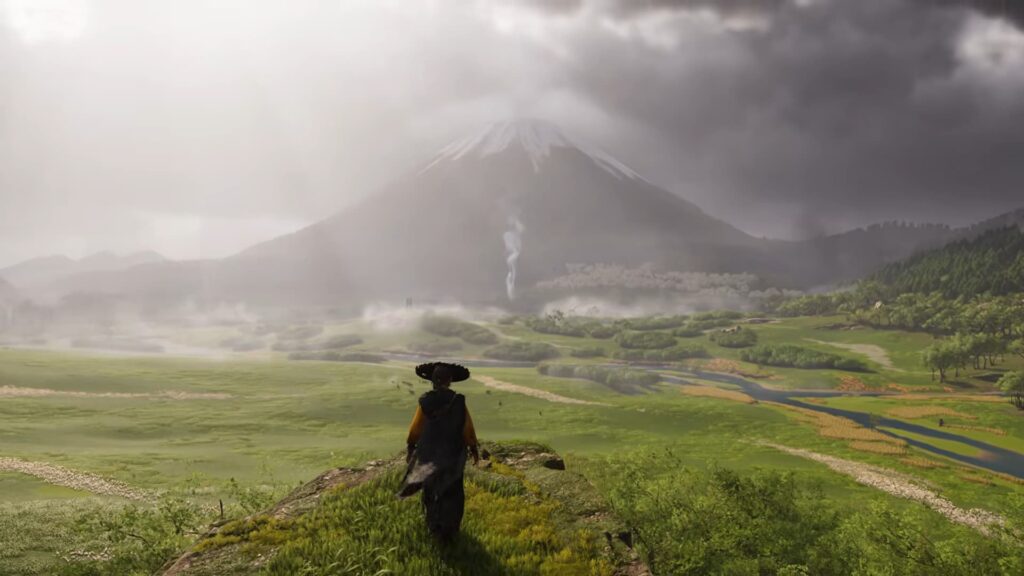
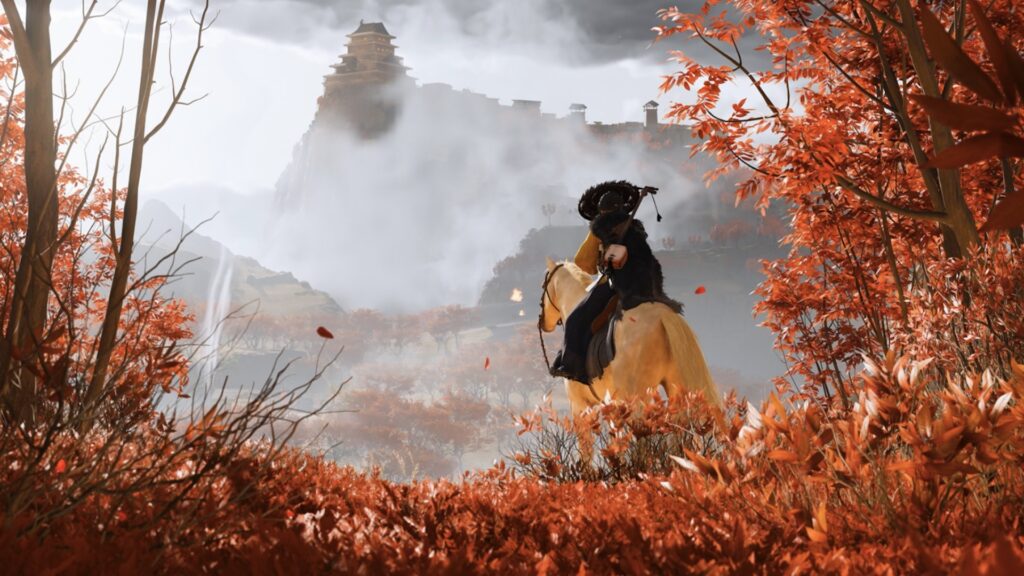
If combat is the game’s engine, atmosphere is its soul. The article’s description of Ezo—from grassy plains to snowy peaks and forests—matches the game’s broad visual reputation: a landscape of strong contrast, rich color, and carefully staged vistas. This is not only about technical fidelity, although the PS5 version clearly benefits from the hardware’s strengths and from Sony’s emphasis on loading speed, 3D audio, and visual detail. It is also about composition. Ghost of Yōtei seems designed to turn travel into a series of painterly moments, so that even riding across open land feels deliberate and cinematic rather than purely transitional.
That visual elegance extends to the game’s treatment of culture and place. The article notes the presence of the Ainu and the inclusion of Ainu items, missions, and contextual detail, all of which point to a more intentional cultural texture than a generic historical backdrop would provide. Pre-release coverage also indicates that Sucker Punch approached Ainu representation with explicit research and care. For a cultural digital magazine, that matters a great deal. It means the game is not merely borrowing local flavor; it is trying, at least in part, to situate its fiction within a real historical and indigenous context. That does not make the game a documentary, and it should not be mistaken for one, but it does show an awareness that worldbuilding carries ethical responsibility.
Still, a review that wants to be honest has to acknowledge that Ghost of Yotei is not flawless. The shared article flags occasional stiffness in line delivery, some minor animation and logic inconsistencies during prisoner liberation moments, and awkward climbing. Those sound like small faults, but in a game that aims for premium cinematic immersion, they can stand out sharply. When a title works so hard to draw the player into a seamless historical fantasy, any moment of mechanical or performative clumsiness becomes more visible. That does not ruin the experience, but it does interrupt the illusion of polish the game otherwise works to sustain.
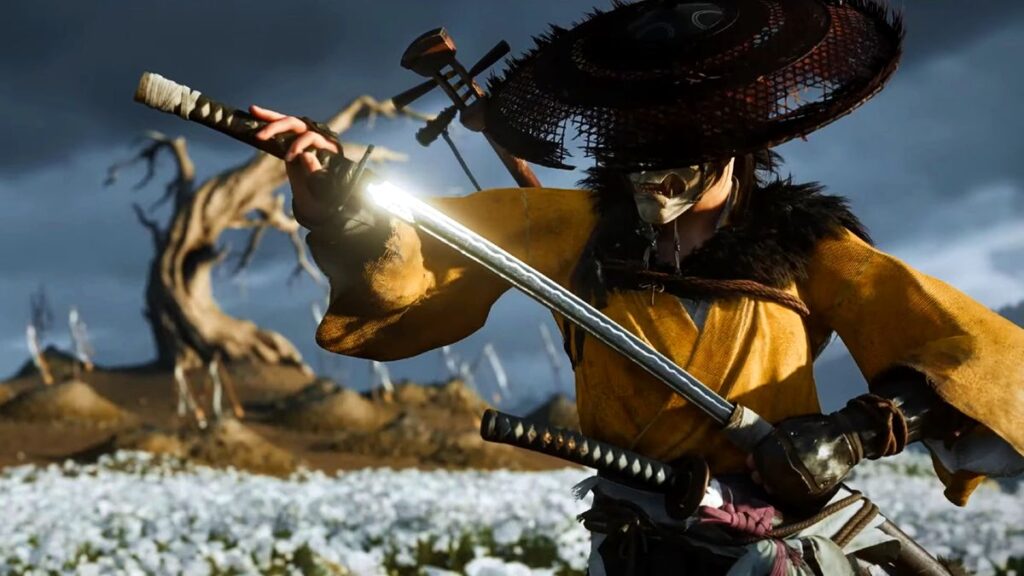
The bigger question is whether the game’s brilliance in combat and world design compensates for the relative familiarity of its narrative arc. In many respects, yes. Revenge stories are as old as storytelling itself, and Ghost of Yotei does not pretend otherwise. Its achievement lies in how well it uses that structure to frame a protagonist who can carry both brutality and tenderness, and a landscape that feels like more than a backdrop for violence. Atsu’s character arc works because she is not reduced to one emotion; she can be severe, wounded, funny, and vulnerable, sometimes within the same stretch of play. That range helps the game avoid the thinness that often afflicts revenge narratives.
As a sequel, it also benefits from knowing what not to repeat. Ghost of Tsushima set a high bar with its elegant combat and painterly presentation, but Ghost of Yotei seems content to evolve rather than overturn the formula. The removal of the stance system in favor of a broader weapon matrix, the increased emphasis on firearms, and the deeper integration of side content all suggest a studio refining a successful framework instead of chasing reinvention for its own sake. That restraint is refreshing. Too many sequels mistake escalation for improvement; here, the design appears to be asking a better question: what would make this world more reactive, more embodied, and more memorable?
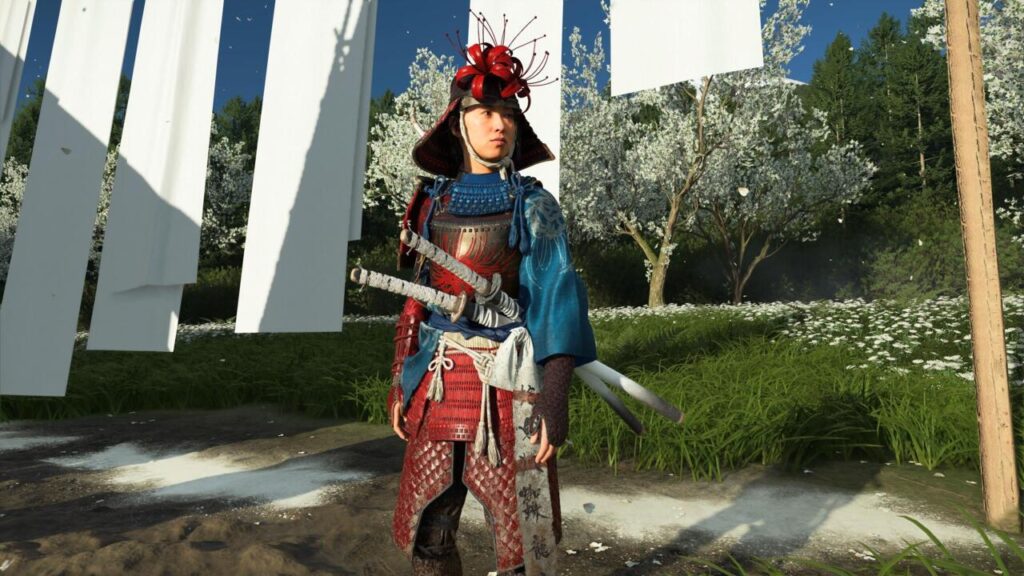
The answer, mostly, is friction. Combat works because the world pushes back. Exploration works because the landscape invites you to stray from the map. Story works because Atsu is not simply a vehicle for revenge but a character whose grief can still surprise us. Even the game’s side systems—painting, shamisen composition, charm upgrades, wolf bonds, armor specialization—contribute to that broader sense of being a person shaped by place, ritual, and survival rather than just a combat loadout. The shamisen and painting mechanics are especially effective as tonal counterweights, because they let Atsu express herself through creation as well as destruction, which deepens her characterization in ways the main quest alone could not.
In cultural terms, the game’s strongest quality may be its sense of embodied regionality. Ezo is not treated as a generic “Japan-like” space, but as a specific northern environment with its own weather, people, histories, and textures. That specificity matters because it gives the game’s aesthetic grandeur a kind of rootedness. The snowy ridges, grasslands, forests, duels, and settlements are not just pretty backgrounds; they are part of the way the game thinks about memory and survival. A revenge story gains power when the land itself seems to remember what has been done within it.
So where does that leave Ghost of Yotei? It leaves us with a polished, richly staged, occasionally familiar but consistently compelling action adventure that expands Sucker Punch’s formula without losing its identity. The game is strongest when it trusts its systems—combat, exploration, environmental storytelling, and tactile PS5 design—to carry the experience forward. Its weaknesses are real, but they are relatively minor in relation to its ambitions. For players and readers looking at the game as both a mainstream blockbuster and a cultural object, Ghost of Yōtei is interesting precisely because it understands spectacle as a route into feeling, not an end in itself.
Verdict
Ghost of Yotei is a worthy successor to Ghost of Tsushima because it deepens the series’ combat, enriches its world, and gives Atsu enough inner life to sustain a long revenge tale. It is not radically original, but it is attentive, elegant, and unusually confident in how it blends violence, beauty, and cultural place. For a magazine audience, that makes it easy to recommend as both a major PS5 release and a fascinating example of how blockbuster games can still feel authored, specific, and alive.