 Atanaria
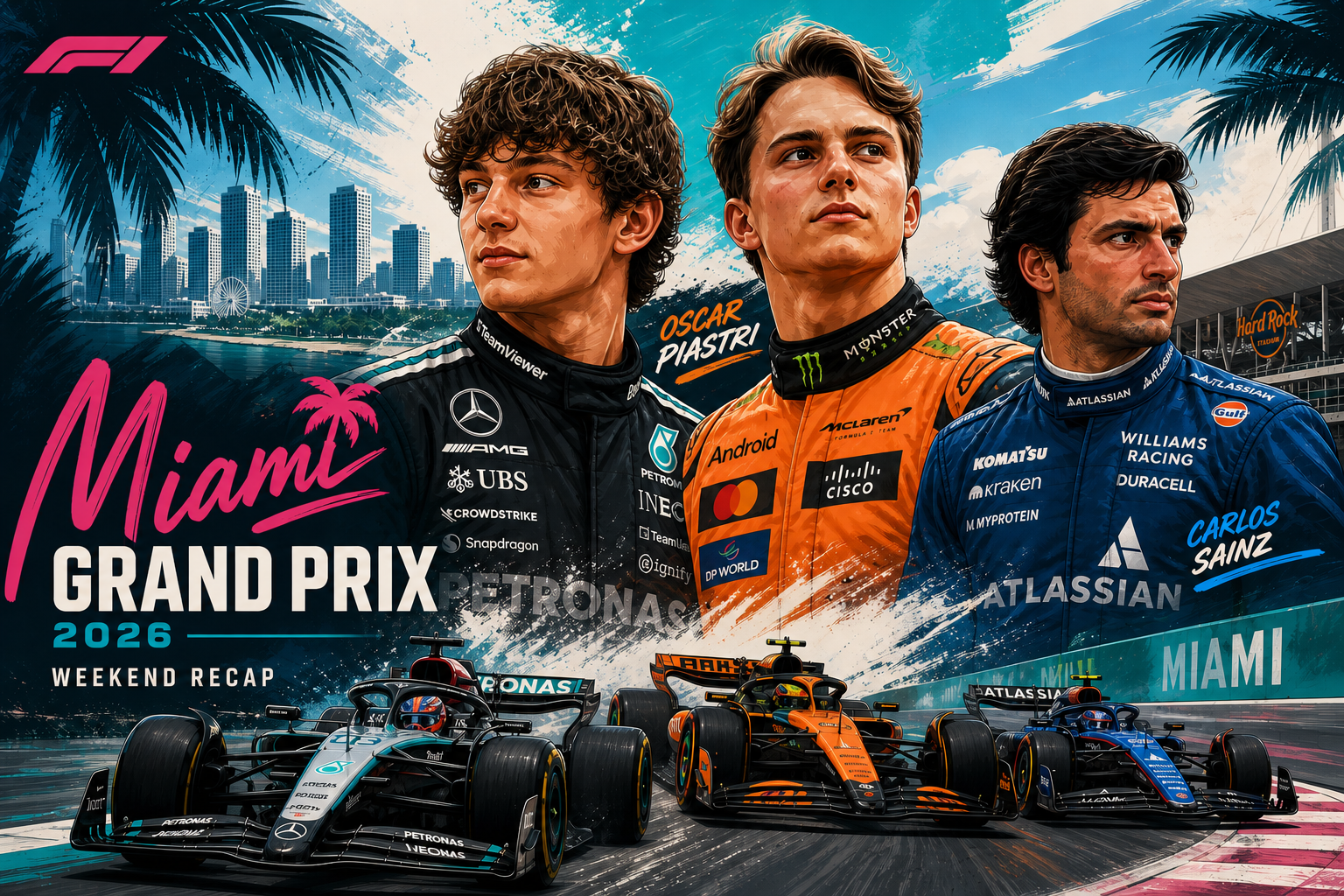
2026 Miami Grand Prix is supposed to shimmer, to entertain, to feel like spectacle first and sporting judgment second. But on this afternoon, beneath the glossy surface and the heat rising off the asphalt, Kimi Antonelli turned the 2026 Miami Grand Prix into something more serious: a declaration. In a race that carried the usual ingredients of Formula 1 theater — strategic tension, shifting positions, pressure from the fastest men in the world — the teenage Mercedes driver was the one who imposed order on the chaos, winning from Lando Norris and Oscar Piastri in a performance that looked less like luck than arrival.
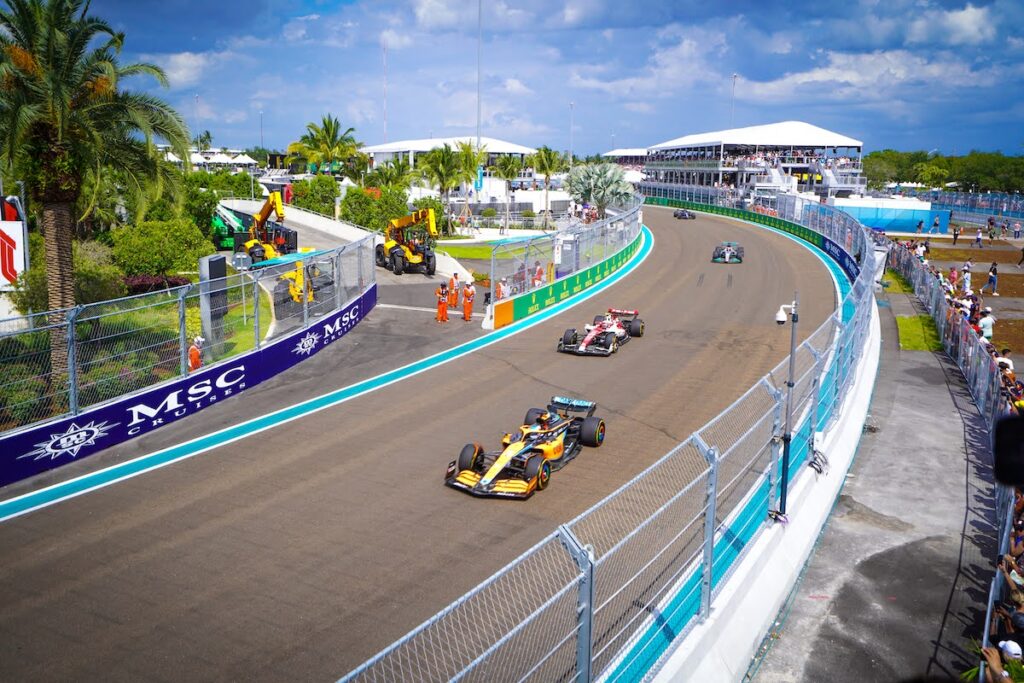
The result mattered, of course. Wins always do. But this one felt larger than the number in the official standings. Antonelli had already been building momentum, and Miami gave him a stage spacious enough for the world to notice. He did not dominate in the style of a driver cruising alone out front from lights to flag. Instead, he won through timing, resilience, and a kind of composure that is often easier to praise after the fact than to recognize while it is happening. In a race where the lead picture kept changing and the pressure never really relaxed, Antonelli stayed intact.
That is what made the afternoon so compelling. Miami did not hand him a clean narrative. It gave him a contest. There were moments when McLaren looked fully capable of taking command, with Norris and Piastri both in the frame at the front, and there were stretches where the pack’s energy seemed to threaten the certainty of any single outcome. Verstappen appeared in the story too, as did Leclerc, and the race carried the sense of a contest that could still be rewritten deep into the distance. Yet when the final shape settled, Antonelli’s name remained at the top.
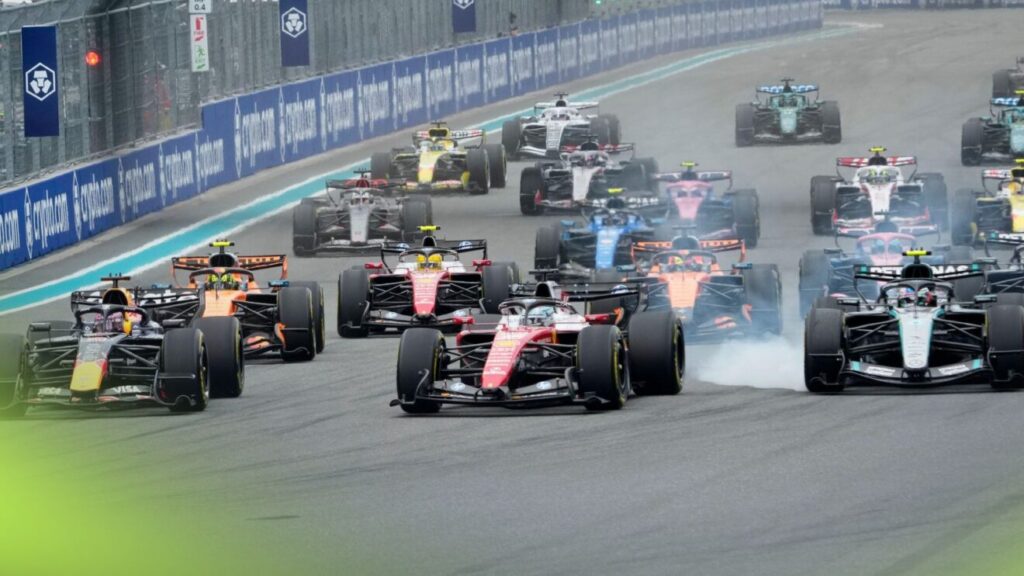
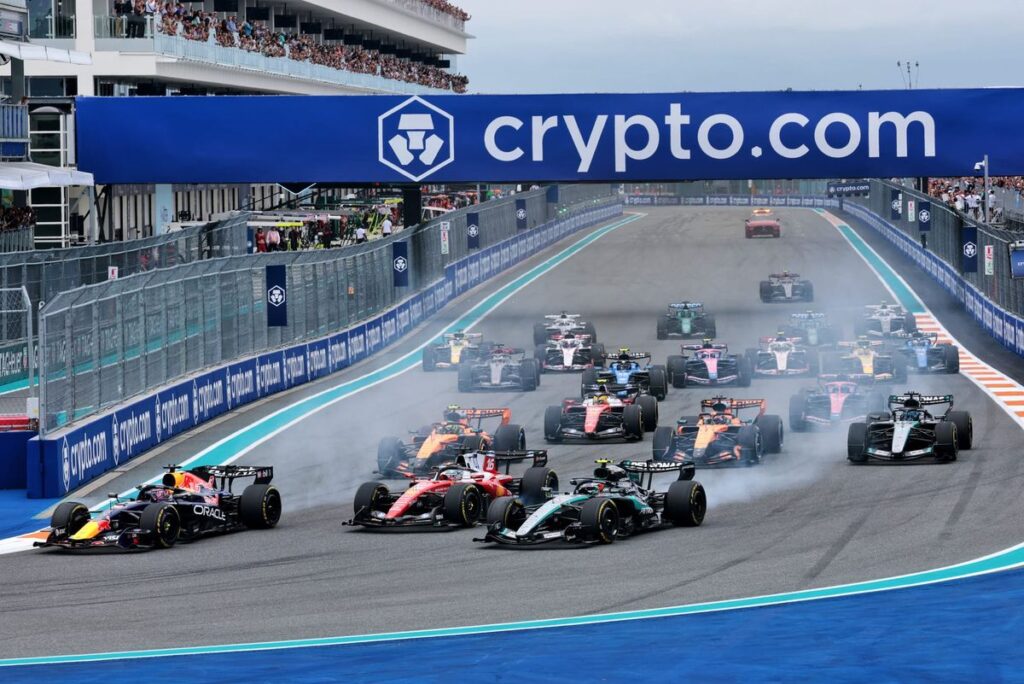
He won by 3.264 seconds, which is not an ocean, but enough to reflect authority. It is the kind of margin that says the leader was pressured without being broken, chased without being caught, tested without yielding. Norris finished second after a race that demanded speed and patience in equal measure, while Piastri completed McLaren’s podium in third. For Mercedes, it was a perfect headline. For McLaren, it was a reminder that strong pace is not always the same thing as control. And for everyone else watching, it was one more signal that Antonelli is no longer merely the bright future. He is beginning to behave like the present.
A race like this also depends on atmosphere. Miami has always understood image, but Formula 1 has a way of stripping glamour down to mechanics, timing, and nerve. The broadcast’s drama may be wrapped in neon, music, and the city’s self-conscious sheen, yet the real story lies in the precision of decisions made at 200 miles per hour. That is why Antonelli’s win felt so satisfying: it was not decorative. It was earned in the language this sport respects most — pace, control, response, and endurance.
The significance stretches beyond a single Sunday. Antonelli’s third straight victory means his championship lead has grown more serious, and with it the pressure attached to every future weekend. Drivers can surprise once; repeating the feat changes the conversation. Three wins in a row begin to alter the tone around a season. Rivals stop speaking about potential and start speaking about threat. Teams stop asking whether the challenge is real and start asking how to answer it. Miami therefore wasn’t only a race result. It was a chapter in the reordering of expectations.
McLaren, meanwhile, leaves Florida with mixed emotions. Norris’s second place was strong, and Piastri’s third kept both cars on the podium, which in most eras would count as a fine afternoon. But Formula 1 is ruthless in a very modern way: a double podium can still feel incomplete if another team’s driver has controlled the emotional center of the race. That was the case here. Mercedes did not merely beat McLaren on the day; Antonelli beat them in a way that made the win feel decisive in the broader mood of the championship.
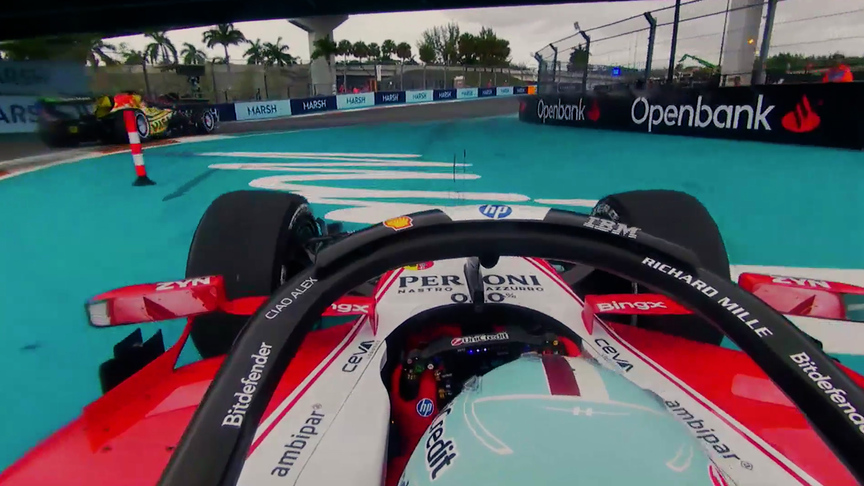
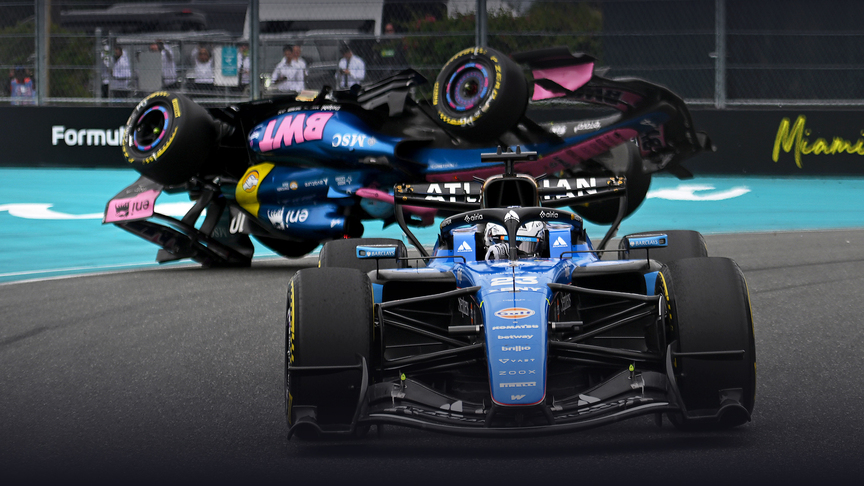
There was also the matter of race rhythm. Miami was not a steady procession. It had enough movement, enough uncertainty, and enough pressure points to keep the final story fluid until the last phase. That is why the result lands with more force than a routine win might have. Antonelli was not protected by simplicity. He had to navigate a race that looked, at times, like it wanted to become someone else’s story. It did not.
Updated Standings
Drivers
| Pos. | Driver | Team | Points |
|---|---|---|---|
| 1 | Kimi Antonelli | Mercedes | 100 |
| 2 | George Russell | Mercedes | 80 |
| 3 | Charles Leclerc | Ferrari | 59 |
| 4 | Lando Norris | McLaren | 51 |
| 5 | Lewis Hamilton | Ferrari | 51 |
| 6 | Oscar Piastri | McLaren | 43 |
| 7 | Max Verstappen | Red Bull Racing | 26 |
| 8 | Oliver Bearman | Haas F1 Team | 17 |
| 9 | Pierre Gasly | Alpine | 16 |
| 10 | Liam Lawson | Racing Bulls | 10 |
| 11 | Franco Colapinto | Williams | 7 |
| 12 | Arvid Lindblad | Racing Bulls | 4 |
| 13 | Isack Hadjar | Racing Bulls | 4 |
| 14 | Carlos Sainz | Williams | 4 |
| 15 | Gabriel Bortoleto | Audi | 2 |
| 16 | Esteban Ocon | Haas F1 Team | 1 |
| 17 | Alexander Albon | Williams | 1 |
| 18 | Nico Hülkenberg | Audi | 0 |
| 19 | Valtteri Bottas | Cadillac | 0 |
| 20 | Sergio Pérez | Cadillac | 0 |
| 21 | Fernando Alonso | Aston Martin | 0 |
| 22 | Lance Stroll | Aston Martin | 0 |
Constructors
| Pos. | Team | Points |
|---|---|---|
| 1 | Mercedes | 180 |
| 2 | Ferrari | 110 |
| 3 | McLaren | 94 |
| 4 | Red Bull Racing | 30 |
| 5 | Alpine | 23 |
| 6 | Haas F1 Team | 18 |
| 7 | Racing Bulls | 14 |
| 8 | Williams | 5 |
| 9 | Audi | 2 |
| 10 | Cadillac | 0 |
| 11 | Aston Martin | 0 |
There are victories that feel impressive, and victories that feel explanatory. Miami was the second kind. It explained where Antonelli is, how quickly he has arrived, and why the rest of the grid now has to account for him differently.
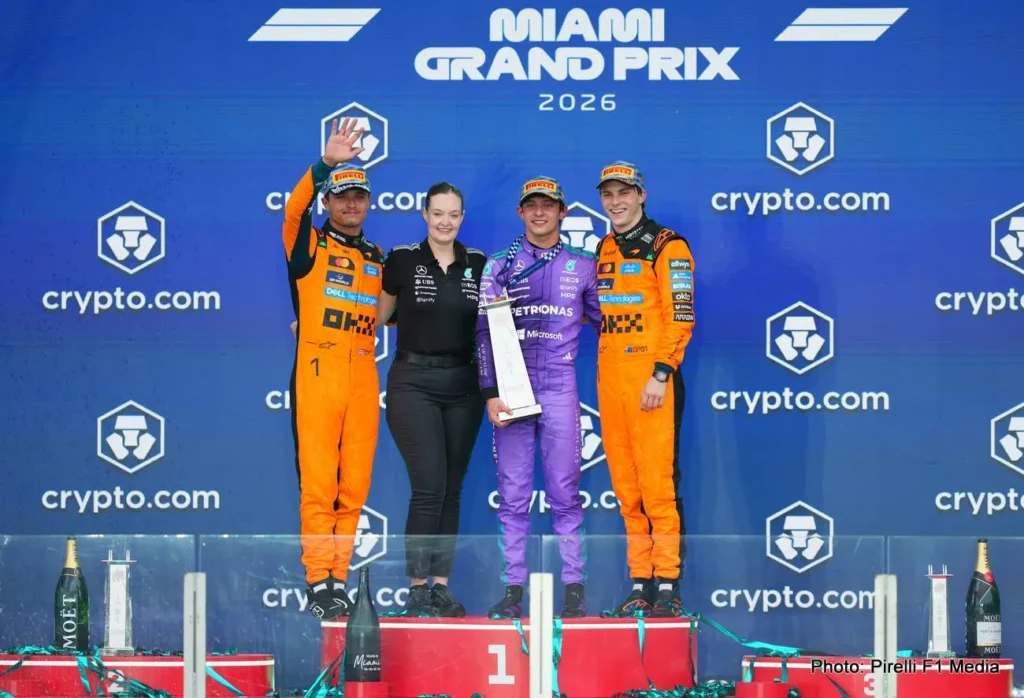
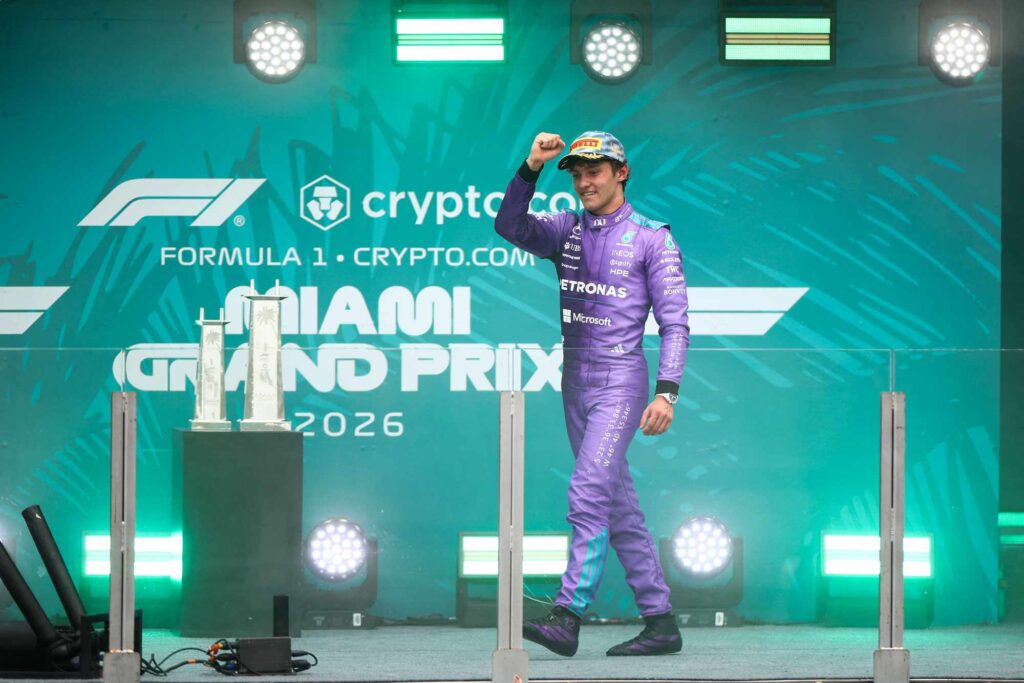
The race offered spectacle, but it also offered evidence: evidence of a driver who is learning how to turn pressure into rhythm, rhythm into control, and control into results. In a sport obsessed with speed, that is often the most dangerous talent of all.