 Atanaria
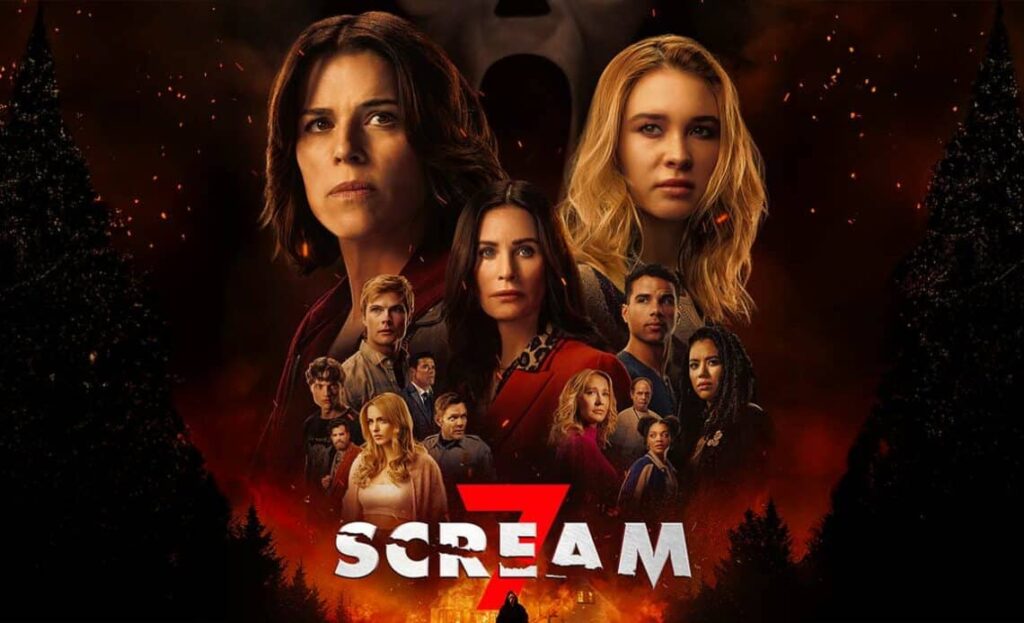
There’s a moment in Scream 7 that tells you exactly what kind of movie you’re watching, and what kind of franchise Scream has quietly become. Sidney Prescott, older now, taut with a kind of permanent vigilance, sits across from her teenage daughter Tatum and tries to turn her own life into a cautionary tale. She cites the Stab movies the way other parents cite the news. Instead of “Look both ways before crossing,” it’s “Never ignore a blocked caller ID.” The conversation doesn’t go well.
You can feel the history in the air between them—the whole cracked, blood‑spattered mythology of six previous films condensed into a mother’s clumsy attempt at parenting. Scream 7 is full of scenes like this, moments where the film seems less interested in who’s under the Ghostface mask than in the strange, uncomfortable question hanging over Sidney’s kitchen table: what happens when a Final Girl grows up?
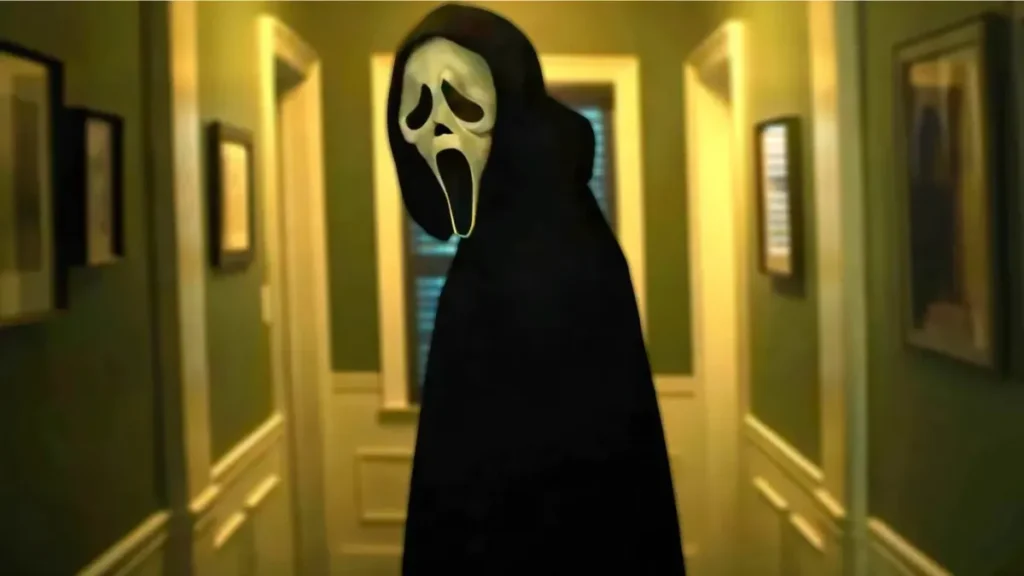
A homecoming, not a reboot
On paper, the seventh Scream shouldn’t work as well as it does. It arrives carrying more baggage than any slasher sequel deserves: high‑profile casting disputes, public firings, fan campaigns, the exhausting churn of online discourse. By the time it hit theaters, many people had already decided what they thought of it.
The first surprise is how small it is.
After Scream VI’s crowded New York chaos—subways, bodega shoot‑outs, city‑wide Ghostface sightings—Scream 7 retreats to something that looks and feels much closer to the world of 1996. Sidney is living under a new name in a quiet Midwestern town, with a husband and children and a life built carefully on a foundation of routine. She goes running in the mornings. She does school pick‑ups. She pretends, for as long as she can, that the Stab movies are just movies.
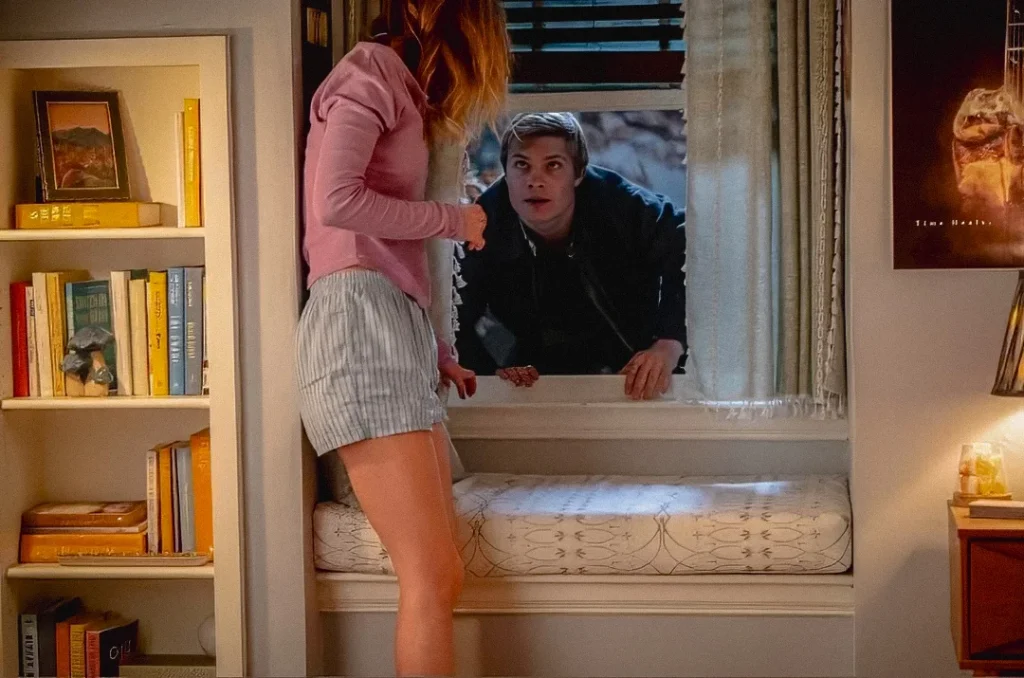
Of course, they aren’t. They never were. One of the sly pleasures of Scream 7 is the way it uses that simplicity to its advantage. Instead of trying to top the spectacle of the last film, it pares back to the basics: a neighborhood, a house, a phone call, a girl alone with a ringing phone. Rather than feel like a downgrade, this return to suburban scale is almost a relief. It’s as if the series remembers it began in bedrooms and kitchens and backyards, not stadium‑sized set pieces.
Kevin Williamson, the original screenwriter, directs this time, and you can see him consciously steering the film back toward Wes Craven’s territory. The camera glides instead of jitters. Rooms are laid out visually before Ghostface enters them, so you understand exactly where the danger is coming from. The tension builds through what you don’t see yet: the shadow at the end of the hall, the door the frame keeps cutting around but never quite shows. It’s a classical approach that gives the movie a quiet confidence, even when the plot gets noisy.
What seals the homecoming is the sound. Marco Beltrami’s score—largely absent from the last few entries—returns like muscle memory. Familiar motifs resurface in altered form, echoing the original trilogy but now weighted with time. You hear a phrase you half‑remember from Scream 2 and realize it’s underscoring Sidney watching her daughter walk into a high‑school party. The music links past and present in a way dialogue never could.
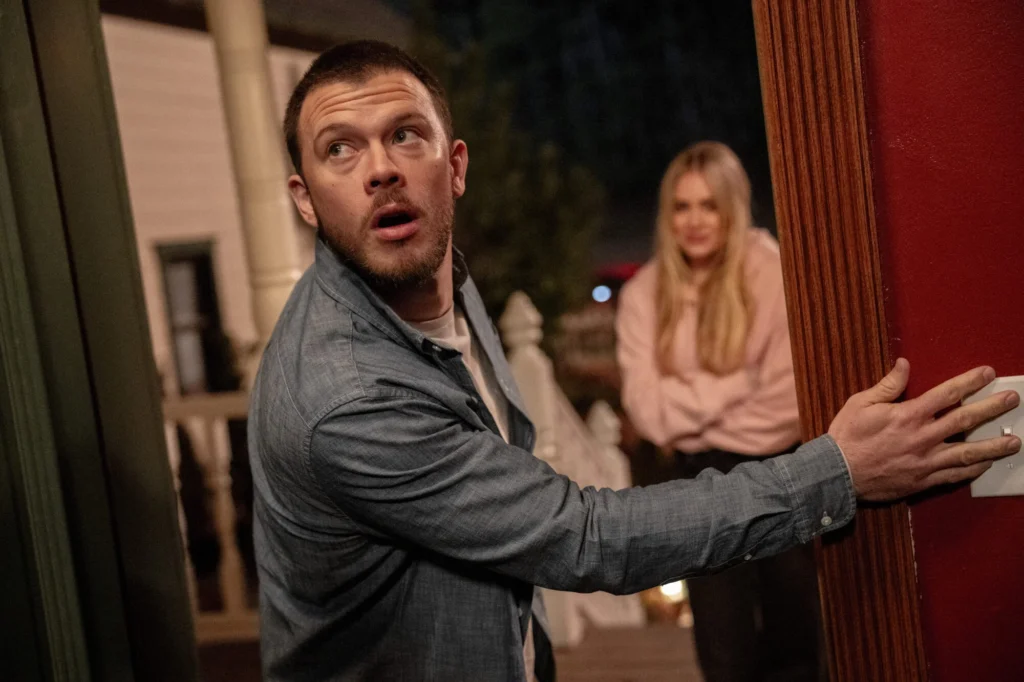
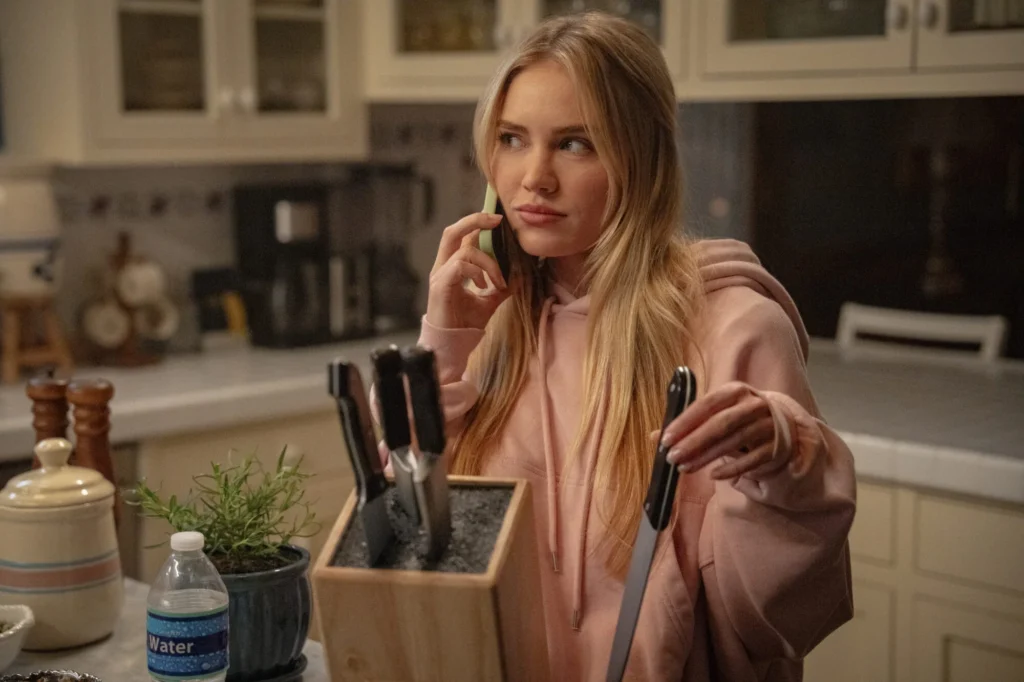


Sidney Prescott, reluctant matriarch of a horror dynasty
Scream has always been about Sidney, even when it pretended otherwise. The two “requel” films tried, with varying degrees of success, to reposition the franchise around the Carpenter sisters, especially Sam, haunted by her parentage and the ghost of Billy Loomis. Their story worked best when it played as a dark mirror of Sidney’s: another young woman trying to define herself against a narrative imposed on her by other people.
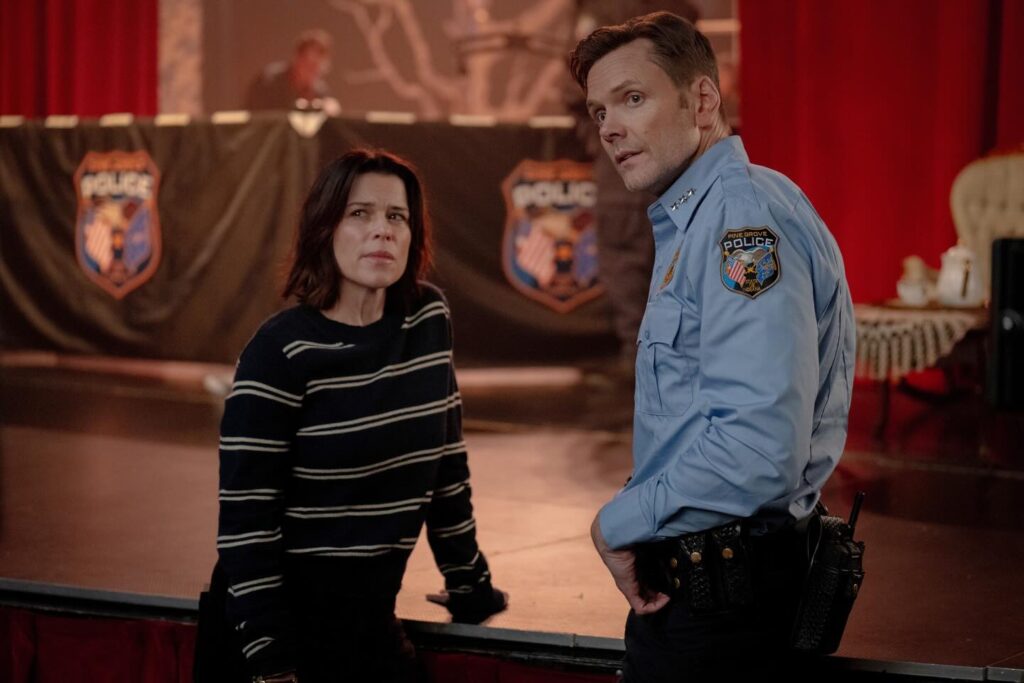
Scream 7 doesn’t erase those films, but it does something more audacious: it quietly insists that the heart of this series was never really up for debate. The moment Neve Campbell walks on screen, the temperature in the theater changes. She doesn’t come back as a triumphant, nostalgic Easter egg; she arrives like a woman who has been forced to live inside a horror franchise for thirty years and is tired of pretending that’s normal.
The film’s smartest decision is to let Sidney be difficult. She is not the serene, healed survivor some might have expected. She’s overprotective to the point of suffocation, a mother who uses her own memoir and the Stab films as a kind of survival curriculum for her kids. She monitors their phones. She polices their social lives. She uses fear as a tool, because fear is the only thing that kept her alive.
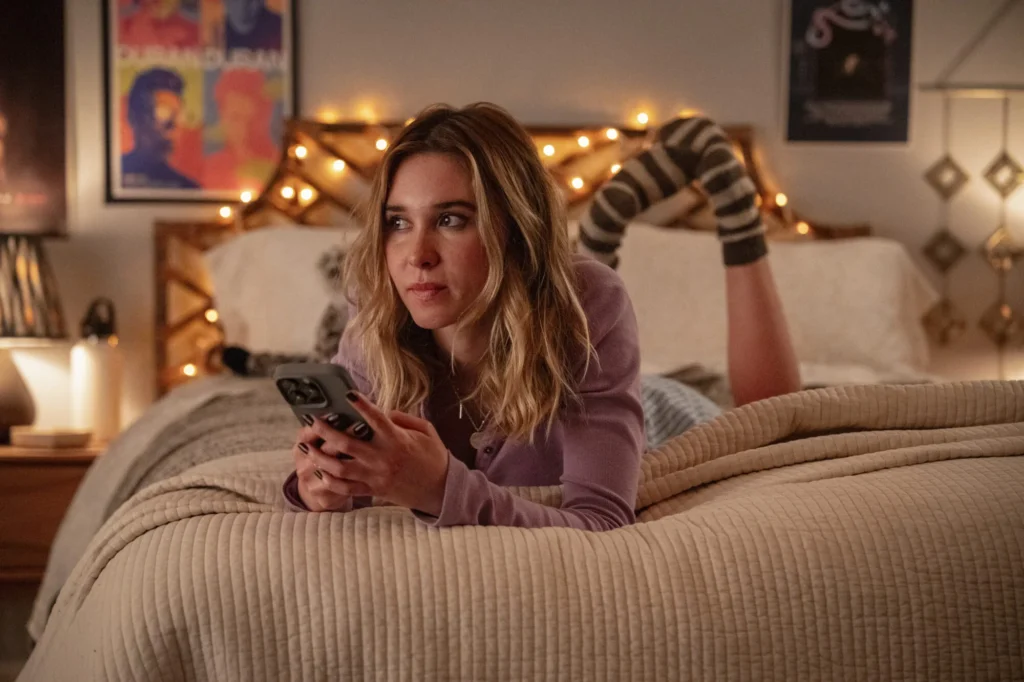
Tatum pushes back, of course. Raised in a world where true‑crime documentaries about her mother auto‑play on streaming platforms, she has never known a time when Sidney Prescott wasn’t a character as much as a person. For her, the story has always already been content. The film takes that gap seriously. Their arguments aren’t generic “you don’t understand me” teen drama; they’re clashes between two generations who have lived on opposite sides of the same mythology.
There’s something quietly tragic about that. Sidney’s entire adult life has been an attempt to regain control over a narrative industry, fandom, and murderers keep ripping out of her hands. Scream 3 dramatized that explicitly by sending her to a film set that recreated her past. Scream 7 takes a more domestic route but cuts just as deep: her own daughter speaks to her in tropes she recognizes from the scripts of her worst memories.
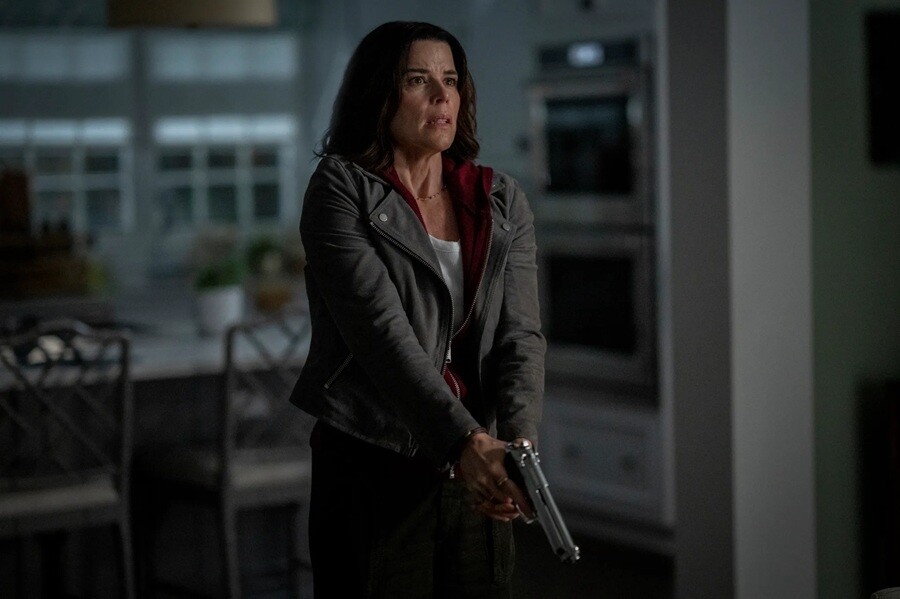
Neve Campbell plays it all with a measured, weary intensity. She doesn’t go big unless she absolutely has to. For long stretches, she does very little—watches, listens, calculates—which is exactly what makes her presence so effective. The movie understands that Sidney has survived this long because she learned, young, how to read a room full of suspects and walk out breathing. It lets her show those skills as a mother, not just a Final Girl.

A film that bites the hand that feeds it
By now, meta‑horror is almost a cliché, and Scream itself shoulders much of the blame. Having reinvented the slasher by making characters aware of the rules, the series then had to keep reinventing its own reinventions. Occasionally, that self‑consciousness curdled into smugness: characters listing “rules for sequels,” smugly explaining “requels” to each other, announcing tropes we all already knew were coming.
Scream 7 feels different. Its self‑awareness isn’t cute; it’s pissed off.
It doesn’t just nod toward the real‑world controversies that surrounded its own production—casting decisions, corporate PR statements, social‑media wars—it absorbs them and spits them back out in altered form. Studio executives become villains not because they green‑light horror movies but because they view Final Girls as recyclable branding. Algorithms dictate which “type” of survivor tests better with which demographic. Legacy heroines are framed, internally, as dead weight: obstacles to fresh casting announcements and hashtag‑friendly new ensembles.
None of this is subtle, but subtlety would almost feel dishonest in this context. When a film franchise has been publicly dissected as cold IP—budgets, box office, “valuable assets”—it’s hard to argue that a delicate metaphor would do the job. Scream 7 goes full satire instead. Its barbs are aimed not just at fictional executives but at the entire machinery that turns real performers and fictional heroines into “content” to be rotated out when they age past a certain point, or when a controversy proves inconvenient.
The script also has fun with the fandom around Stab, which has metastasized into podcasts, conventions, and obsessive online communities. Tatum’s peers treat Sidney’s trauma as a shared intellectual property. They trade theories about “what really happened.” They quote from the movies, not from Sidney’s actual testimony. When a new Ghostface surfaces, some are horrified; others are thrilled, posting breathless commentary about “the franchise returning to its roots” even as bodies drop.
This is Scream at its sharpest: not just commenting on horror movies, but on the real economy of attention and outrage that sustains them.

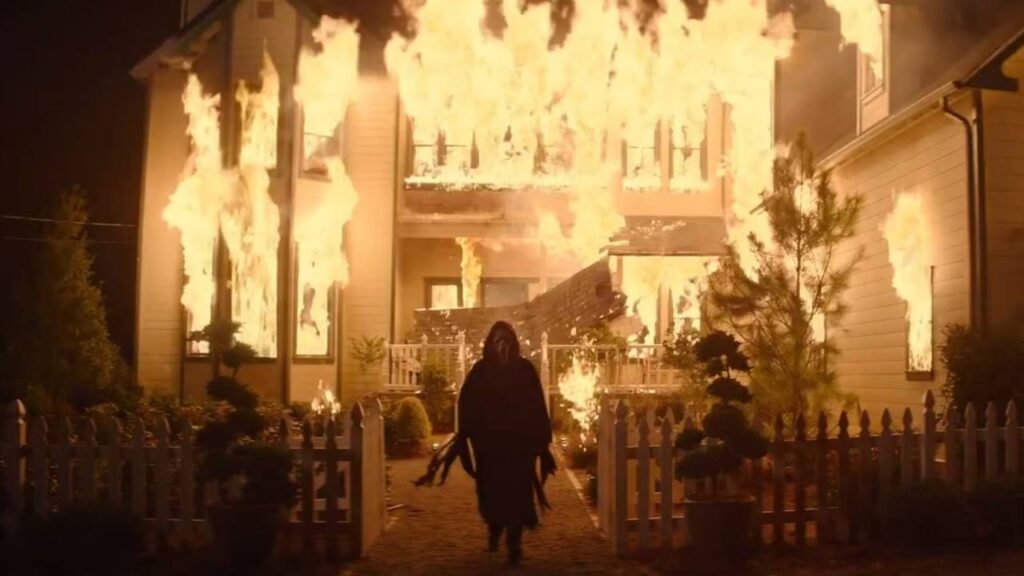
Ghostface, meaner than ever
Then there’s the violence.
Scream has always walked a line between playful and brutal. The first film famously made audiences flinch with its opening kill—genuinely ugly in its physicality—then eased into black comedy and meta riffs. Later entries occasionally leaned more into spectacle than pain: elaborate set‑pieces, choreographed chase scenes, creative weapons.
Scream 7 doesn’t reinvent the wheel, but it does remind you that being stabbed is supposed to hurt. The kills are not the biggest or bloodiest in the franchise, yet they land with a nasty intimacy. The camera often stays close: the flex of a hand, the wet gasp of someone trying to speak around a wound. Ghostface feels less like a cosplay icon and more like what he’s always meant to be—an intruder breaking into the fragile bubble of normal life Sidney has tried to create.
The film also knows when to hold back. Several sequences build their tension less from the act of killing than from the threat of it: a kitchen scene where everyone is moving around each other with knives and hot pans, the danger hiding in plain sight; a school hallway where a locker door opens, and for a moment you aren’t sure if the figure inside is a joke or a corpse. Williamson and his team understand that, seven movies in, audiences will assume a twist in every frame. Scream 7 uses that expectation as a pressure cooker.
The friends who don’t need to be more
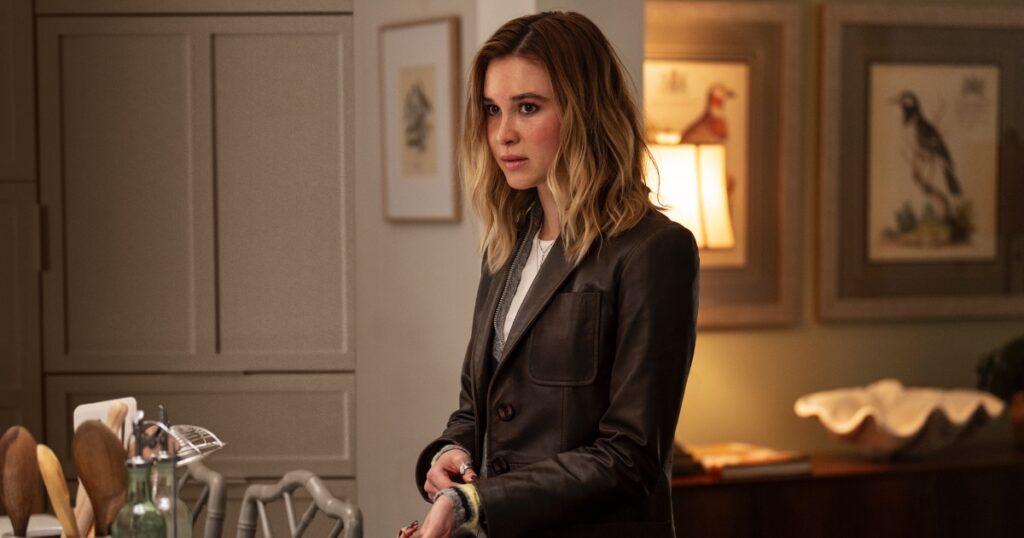
One of the more curious criticisms leveled at Scream 7 is that Tatum’s circle of friends isn’t richly developed. There’s no new Randy, no Kirby‑level breakout, no one you can imagine carrying their own spin‑off down the line. That’s true, strictly speaking. It’s also part of the reason the film works.
The movie isn’t trying to introduce a fresh “Core Four” to replace the last one. Those slots were clearly intended, once, for other characters in other movies. Scream 7 is honest about the fact that it’s arriving at a point of fracture. Rather than pretend it’s the launch of a pristine new era, it uses its supporting teens as what they are here: suspects, foils, bodies in harm’s way.
They’re sketched in just enough to make their suspicions plausible. One has a knowledge of true crime that feels a little too enthusiastic. Another is so performatively gentle that you instinctively distrust him. A third is forever filming, framing reality through their phone, always poised to get the shot. You learn enough to place them on your mental suspect board, to argue about them on the ride home. You don’t learn enough for the film to pretend they’re secretly the new emotional backbone of the saga. That honesty feels, in its own way, respectful.
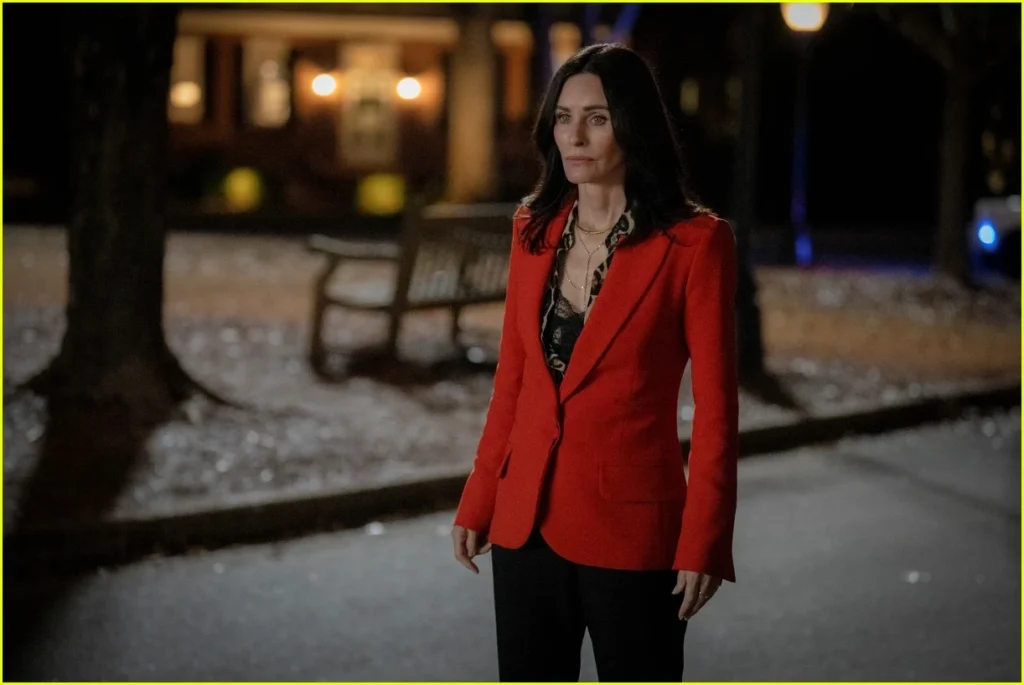
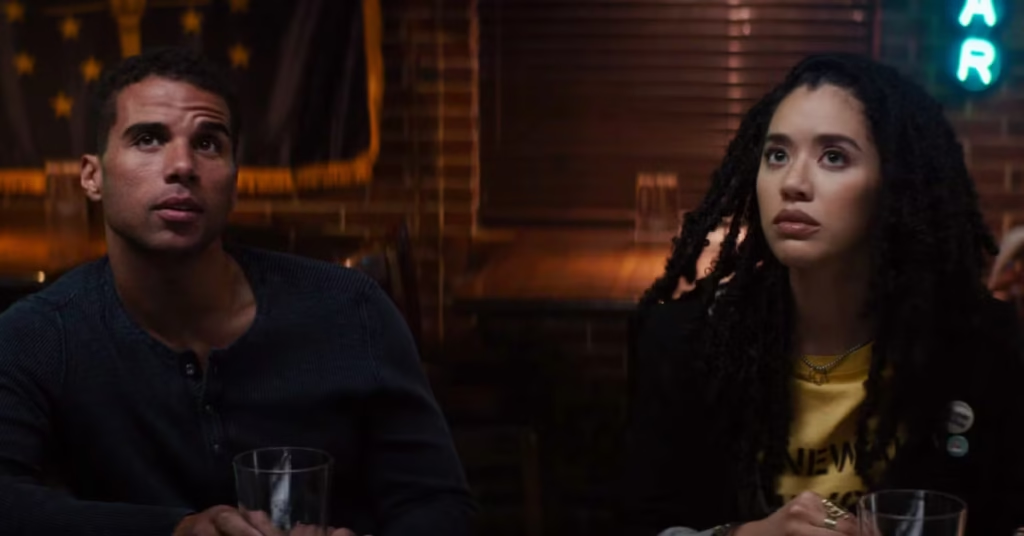
Most of the human weight, instead, resides where it should: with Sidney, Tatum, and the returning survivors who’ve actually lived through the previous massacres. Gale’s entrance, late but gratifying, is a reminder that longevity in this universe is something you earn one stab wound at a time. Mindy and Chad, veteran survivors of the Carpenter films, drift in as living links to the requel era. The movie doesn’t linger on them, but it doesn’t throw them away either. It lets them be what they are: supporting characters in someone else’s story this time.
The “worst” final act that secretly fits
And then we come to the part almost everyone seems to agree on: the ending.
By now, the Scream finale has become as ritualized as the Ghostface costume itself. We know what’s coming: a reveal, a rant, a fight through some precarious environment full of things to fall off or through. The identity of the killer matters, but often, the tenor of their monologue matters more. Are they ideological? Petty? Greedy? Deeply personal?
Scream 7’s reveal has already been called, in some corners, the worst in the series. It’s easy to see why. The motive is outrageous, the connections convoluted, the speech dialed up past eleven. Logic is not the film’s top priority here.
But then, when has it ever been? Stu and Billy’s plan in the first film is collagen‑thin if you look at it too closely. Roman’s retroactive origin story in Scream 3 requires more suspension of disbelief than many will admit. The Bailey family in VI stretch credibility to the breaking point. What saves those climaxes is not coherence; it’s commitment. The actors go for broke. The films embrace the theatricality of confessing to murder in a room full of trophies and corpses.
Scream 7 follows that tradition, perhaps more unabashedly than any of its predecessors. Its killer treats the monologue less like an explanation and more like performance art, an unhinged TED Talk on the nature of legacy, ownership, and who gets to be the main character of a story. The rant is ridiculous and, as it gathers steam, genuinely fun. It tips the film from its grounded family drama into a high‑camp exorcism of franchise baggage.
Is it clean? No. Is it elegant? Not remotely. But in a movie that has spent most of its runtime grappling with the impossibility of satisfying everyone—old fans, new fans, corporate masters, actors, critics—the excess of that final act feels oddly honest. It’s the scream after the slow burn, messy and too loud and slightly embarrassing, but inevitable.
A masterpiece with scars
Scream 7 will never be the neat, legacy‑capping “perfect” sequel some imagined when talk first began of bringing Sidney back for a new era. It’s too bruised for that, too shaped by a decade’s worth of decisions that were made without it in mind. You can feel the seams where one plan for the franchise gave way to another. You can sense the script folding real‑world frustrations into fictional arguments. The scar tissue shows.
That, for me, is precisely why the film feels like a minor masterpiece.
It’s not the best Scream movie. The original still towers over the franchise in terms of precision and impact. One of the early sequels, depending on your taste, might be tighter, funnier, more inventive. But Scream 7 is the first film since Craven’s death that truly looks the series in the eye and asks what it has become—on screen, in the industry, in the culture. It doesn’t always like the answers it finds. It doesn’t always know what to do with them. It tries anyway.
In doing so, it gives Sidney Prescott something she’s never fully had before: not just survival, not just another victory over another masked obsessive, but a story that recognizes her as the gravitational center of a horror universe. It lets her be wrong, scared, overbearing, and exhausted. It lets her fail her daughter and then try to do better. It makes her more human, not less iconic.
You can see why some people bounced off the film. It’s smaller when they wanted bigger, stranger when they wanted slicker, angrier when they expected a nostalgic victory lap. But if you’re willing to sit with its contradictions, Scream 7 reveals itself as exactly what this messy, over‑extended franchise needed at this moment: not a reset, not a requel, but a reckoning.